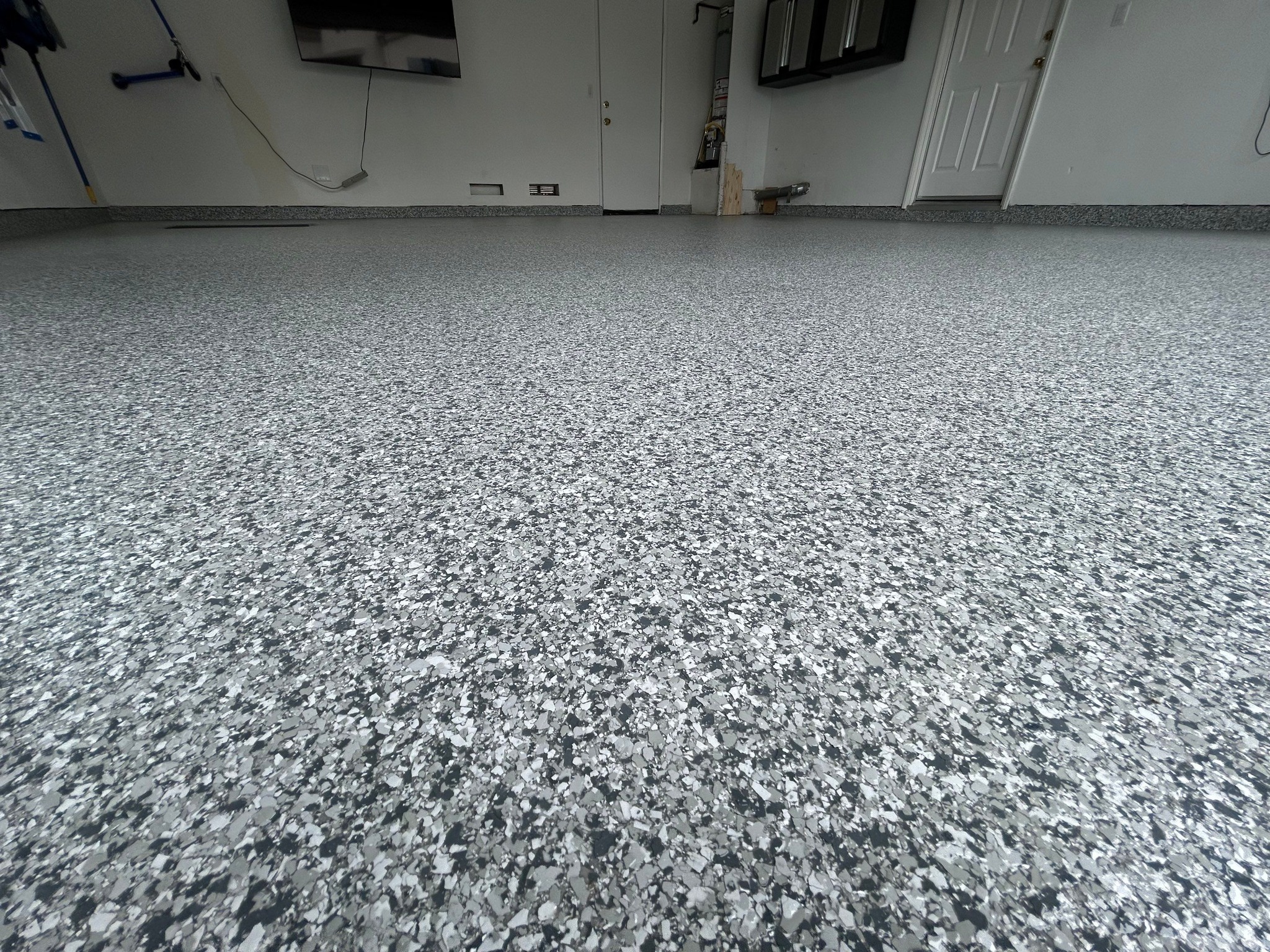
Epoxy floor bubbling is caused by outgassing, which occurs when moisture vapor trapped in concrete pushes through a freshly applied coating as it cures, forming bubbles or pinholes. North County Synthetic Coatings installs floor coating systems for San Diego County homeowners and recommends diamond grinding and moisture testing before any coating application to prevent it.
Most homeowners assume epoxy bubbles mean a bad product or a botched pour. The real culprit is what happened before coating. Concrete holds moisture, especially in coastal communities like Carlsbad and Encinitas where morning marine layer keeps humidity elevated for hours. Apply a rigid coating over an untested slab, and that trapped vapor finds its only exit: straight through your new floor.
Why Concrete Outgasses
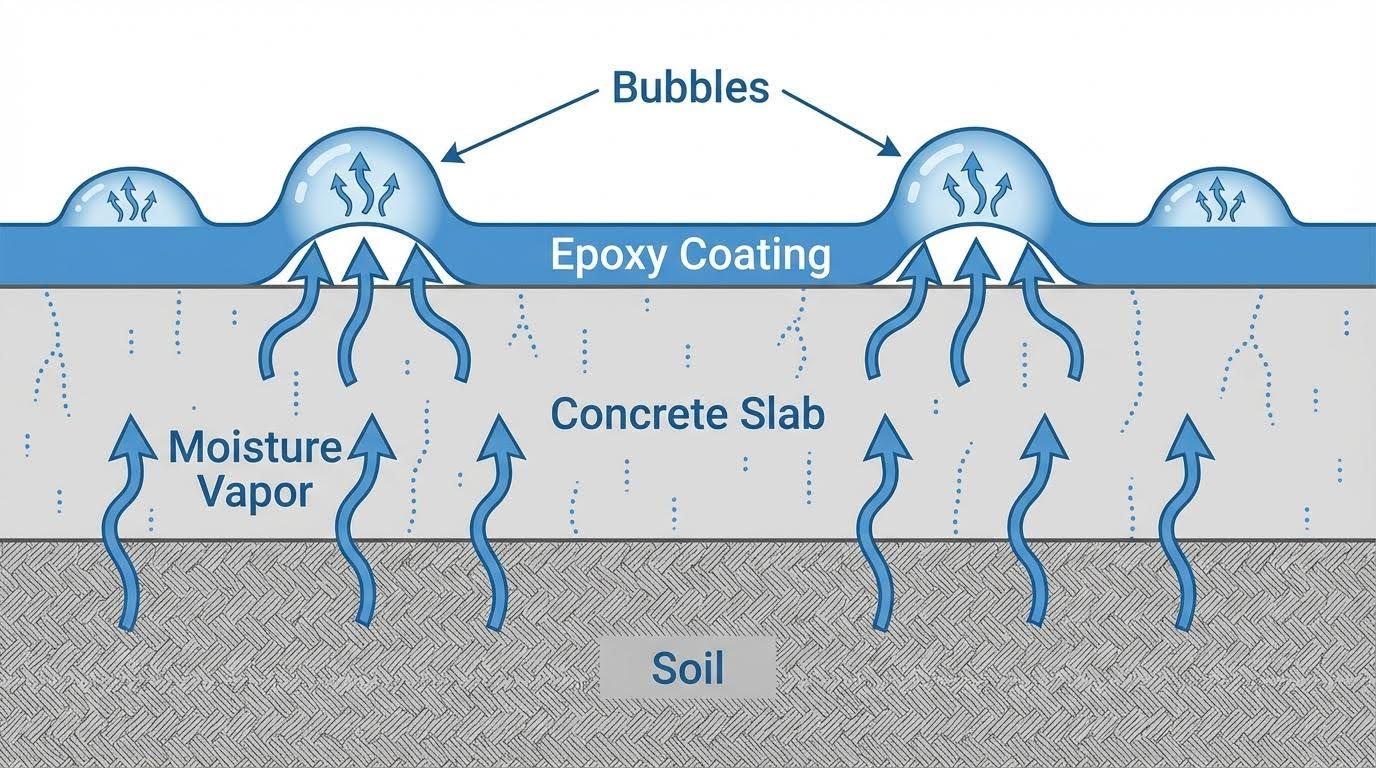
Concrete isn’t solid. It’s a network of tiny capillaries that hold and release moisture vapor continuously. This process, called moisture vapor transmission (MVT), happens even in slabs that feel dry to the touch. Standard epoxy cures rigid and fast, so outgassing vapor arriving during the cure window has nowhere to go except up, creating bubbles that range from barely visible pinholes to dome-shaped blisters.
In inland communities like San Marcos, summer heat accelerates vapor movement. Along the coast, marine layer loads moisture into surface concrete in the morning, which drives upward as temperatures climb. Either way, coating without moisture assessment works against local conditions from the start.
Why Surface Prep Determines the Outcome
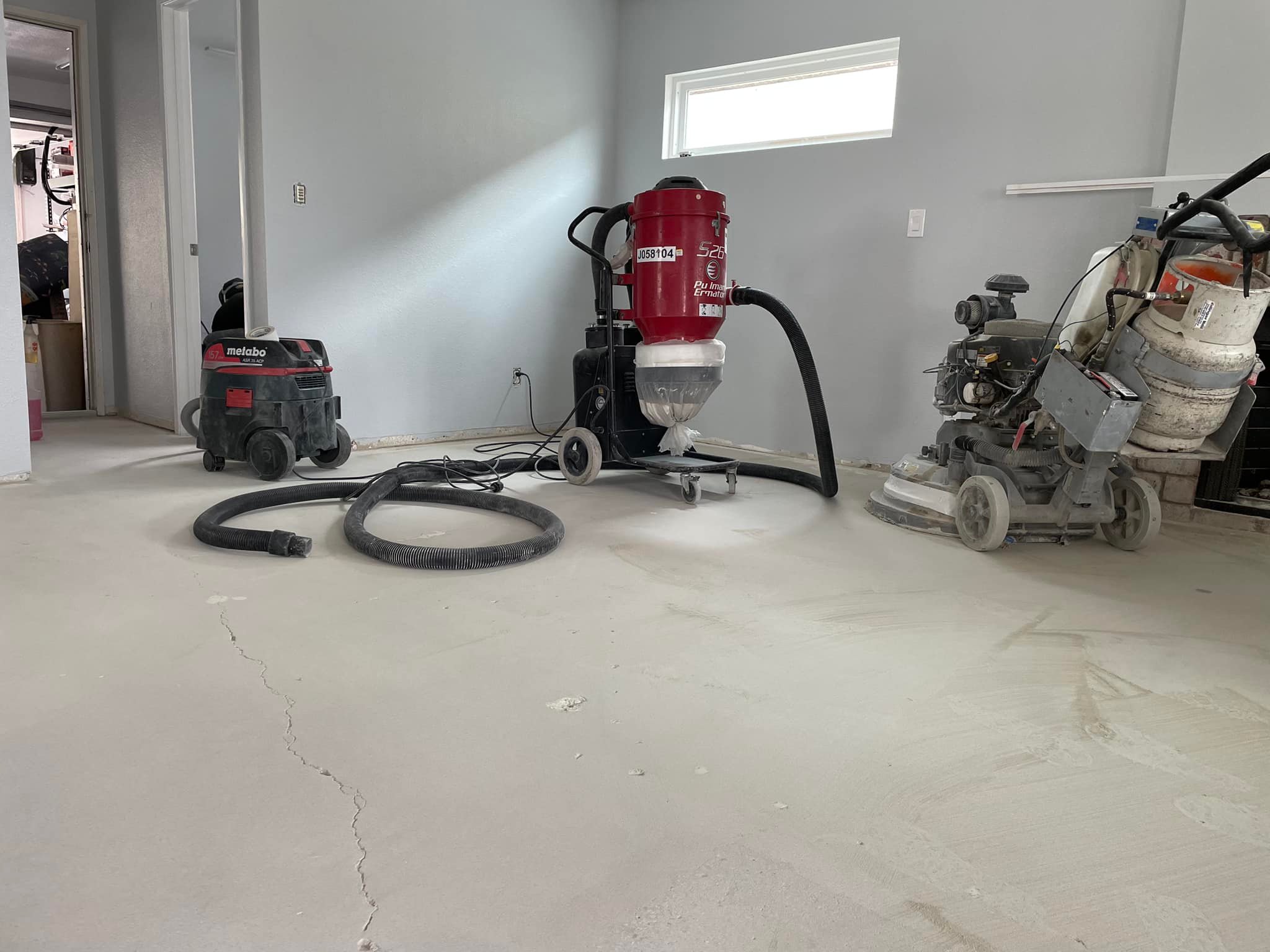
The industry-standard prevention method is diamond grinding, industrial equipment that mechanically opens the concrete’s surface profile so coatings can penetrate and bond rather than sit on top. Acid etching, common in DIY kits, leaves the pore structure partially sealed. What skipping prep costs you:
- Diamond grinding creates true mechanical bonding; acid etching doesn’t
- Moisture vapor testing after grinding identifies problem slabs before coating begins
- Skipping that test on coastal or recently poured slabs significantly raises outgassing risk
North County Synthetic Coatings runs a 30-inch industrial grinder on every job, with every edge ground by hand. Coating begins only after the slab is fully opened and moisture-assessed. That’s the standard behind a professionally installed garage floor coating with a limited lifetime warranty.
Can You Fix Epoxy Bubbles, and Do Better Coatings Prevent Them?
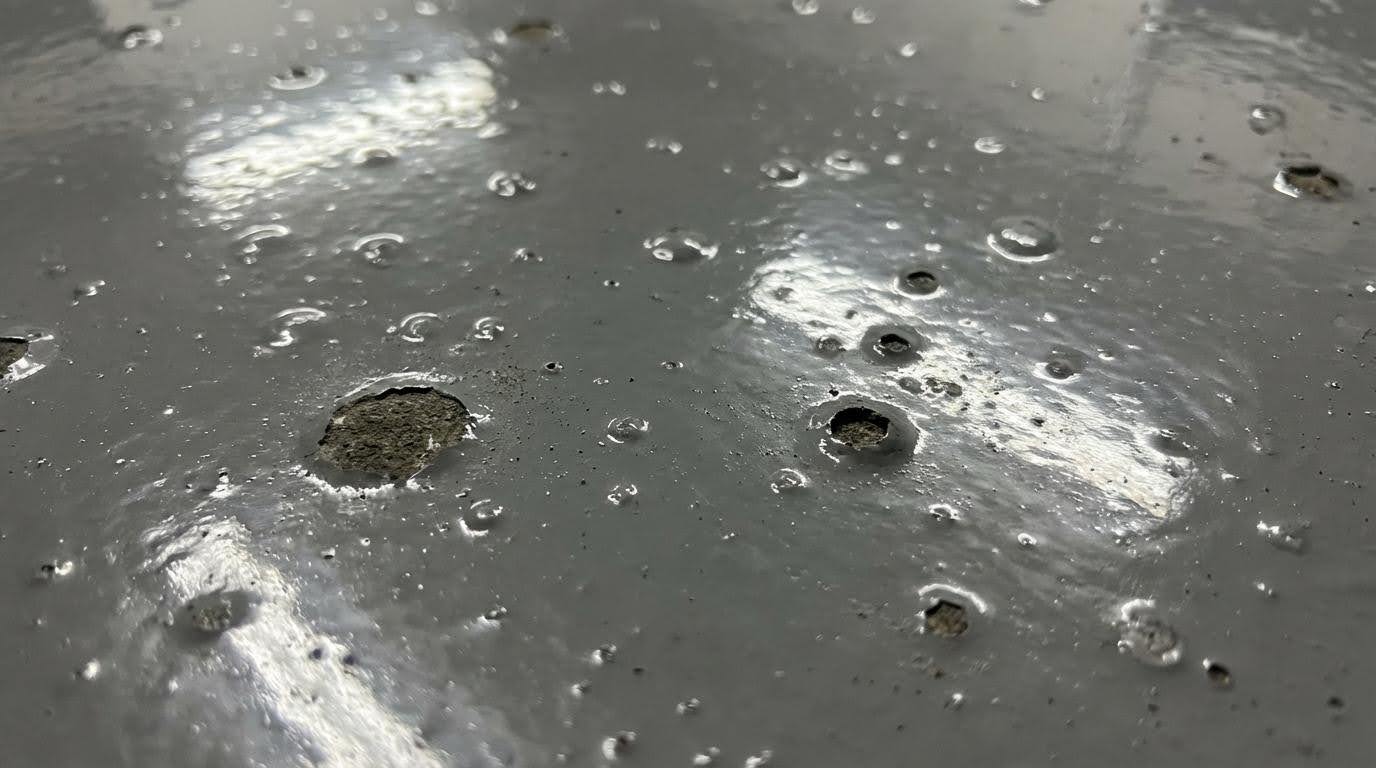
Once epoxy cures with bubbles, spot-patching rarely holds. Blisters bond into the film, and a reliable repair typically means grinding the entire surface back down and re-coating from scratch, the same labor as a new installation. If you’re already looking at a bubbling or peeling garage floor, re-coating over the same unprepped slab will produce the same result.
Polyurea (a flexible polymer that cures faster and bonds stronger than traditional epoxy) and polyaspartic (a UV-stable topcoat over the polyurea base) handle the outgassing window differently. The Penntek system used by North County Synthetic Coatings is rated 4X stronger than epoxy and cures faster — reducing the window when rising vapor can disrupt the film. For San Diego County homeowners, that flexibility helps, but the real protection still comes from the prep.
Frequently Asked Questions
Why does my new epoxy floor have bubbles but my neighbor’s doesn’t?
The most common explanation is surface preparation. If your floor was acid etched before coating and your neighbor’s was diamond ground, the bonding profile and moisture transmission characteristics of the two slabs are completely different. Concrete that’s properly ground and moisture-tested before coating is far less likely to outgas during the curing window, regardless of which product was applied.
How long after epoxy bubbles appear can I still fix the floor?
Epoxy bubbles become permanent once the coating fully hardens, typically within 24 to 72 hours of application. If bubbles appear while the coating is still wet, some installers re-roll the surface to release trapped air. After full cure, the only reliable fix is complete removal and reinstallation, with corrected surface preparation addressing the underlying cause.
Does a polyurea floor coating bubble the same way epoxy does?
Polyurea coatings are less susceptible to outgassing than epoxy because of their faster cure time and greater molecular flexibility. North County Synthetic Coatings uses the Penntek polyurea and polyaspartic system, which cures significantly faster than standard epoxy, reducing the window during which rising vapor can disrupt the film. Proper diamond grinding and moisture testing remain essential regardless of coating type.
Stop Guessing—Get a Floor That Won’t Bubble
Epoxy floor bubbling is a prep problem with a known solution. Diamond grinding, moisture assessment, and the right coating system eliminate the conditions that cause outgassing. San Diego homeowners ready to fix a failed floor (or start with one built to last) can request a free estimate from North County Synthetic Coatings. Every installation starts with the prep that makes lasting results possible.

Epoxy floor bubbling is a prep problem with a known solution. Diamond grinding, moisture assessment, and the right coating system eliminate the conditions that cause outgassing. San Diego homeowners ready to fix a failed floor (or start with one built to last) can request a free estimate from North County Synthetic Coatings. Every installation starts with the prep that makes lasting results possible.