Epoxy floor yellowing happens because standard epoxy resins are chemically unstable under UV light. The coating gradually breaks down and discolors, often shifting from gray to amber or yellow within a few years, and no cleaning product reverses it. North County Synthetic Coatings installs a polyurea and polyaspartic system through Penntek Industrial Coatings that is 100% UV stable and holds its color under direct sun exposure.
A homeowner in Encinitas called us after two years of wondering why his garage floor kept getting worse despite regular cleaning. He’d installed a standard epoxy coating shortly after buying his home, loved the look during the first year, then watched it slowly shift from a clean light gray to an uneven yellowish-brown. He scrubbed it, sealed it again with a store-bought product, and eventually assumed it was a cleaning problem. It wasn’t. It was chemistry, and once that process starts, it doesn’t stop.
Why Do Epoxy Floors Turn Yellow?
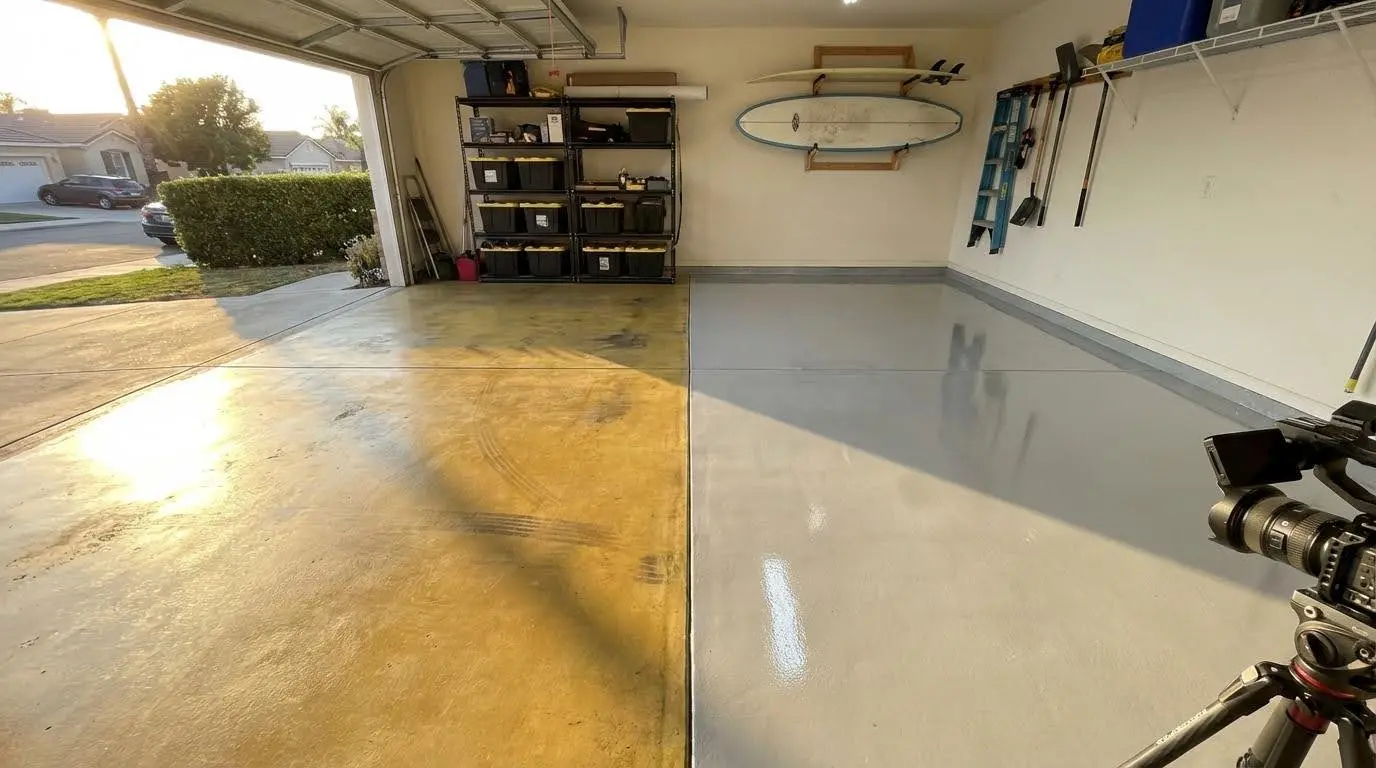
The yellowing in standard epoxy isn’t surface dirt. It’s a breakdown of the coating itself. Most epoxy products are made with aromatic resins, which contain chemical structures that react when exposed to UV radiation. Over time, UV light breaks apart the molecular bonds in the resin, producing compounds called chromophores that absorb visible light and emit it as yellow. The more UV exposure, the faster this process moves.
In San Diego County, that exposure is relentless. Unlike markets where garages spend half the year in cloud cover, North County homes often have garage doors open year-round: coastal breeze, year-round sunshine, and no real off-season for UV damage. A floor that gets two or three hours of direct afternoon sun daily in Encinitas or Carlsbad is aging that epoxy faster than most homeowners expect.
This is why epoxy floor yellowing isn’t a sign of a bad installation. It’s a sign of using a material that isn’t designed for this environment. Homeowners exploring garage floor coatings often don’t realize the coating chemistry matters as much as the installation quality.
Other Factors That Speed Up the Process
UV exposure is the primary driver, but several other factors make yellowing worse and faster.
Amine Blush
Many epoxy systems use amines as a hardening agent. When amines migrate to the surface during curing (a process called amine blush), they leave a cloudy, greasy film that reacts further with moisture and light. The result is accelerated yellowing even in low-UV environments.
Heat and Garage Conditions
Garages that get warm in the afternoon trap heat, which accelerates the chemical degradation already triggered by UV. In inland communities like Poway or El Cajon, where summer temperatures can push well into the 90s, a sealed garage floor can reach surface temperatures that speed up the process significantly.
Moisture Vapor from Concrete
Concrete is porous, and moisture vapor continuously moves upward through the slab. When that vapor gets trapped beneath an epoxy layer, it can cause both adhesion failure and surface discoloration. San Diego’s morning marine layer adds a daily moisture cycle that most epoxy products aren’t engineered to handle over the long term.
What About “UV-Resistant” Epoxy?
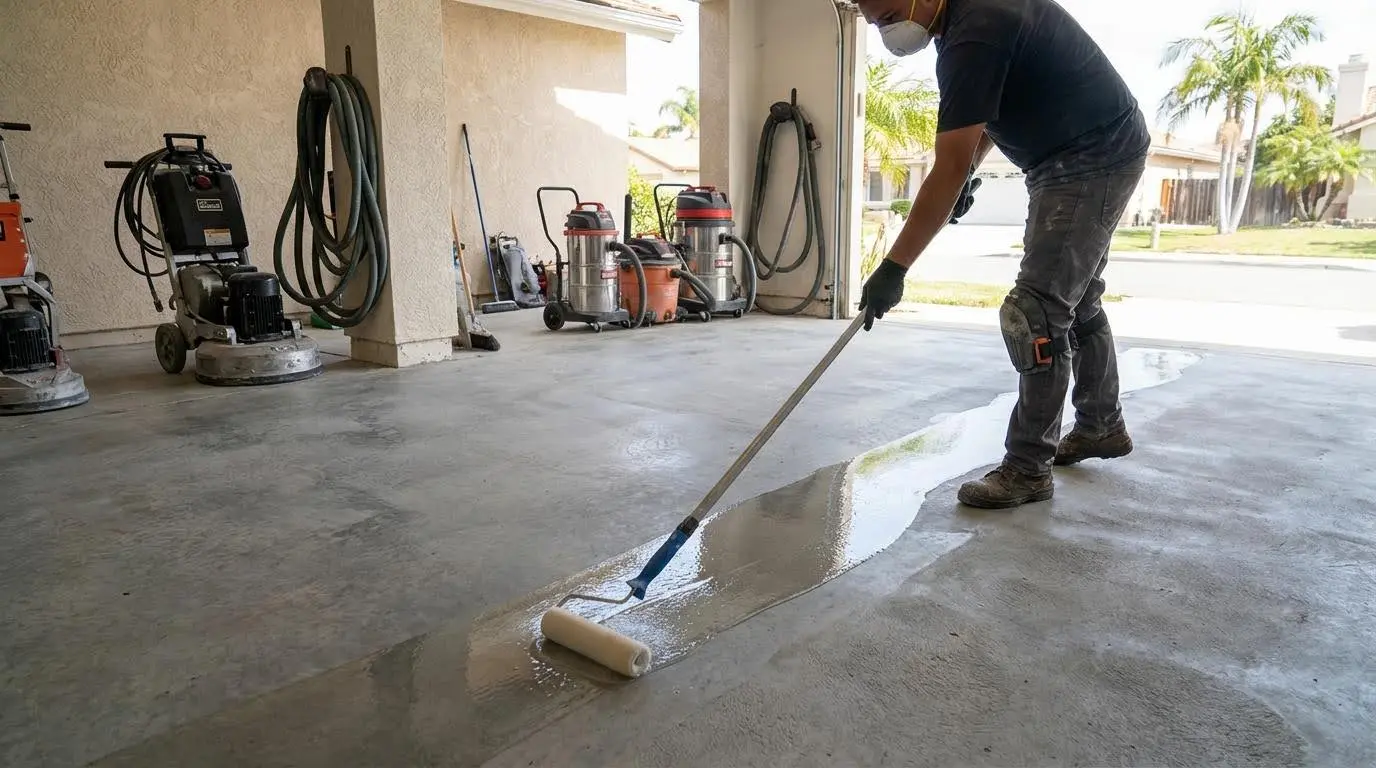
Some manufacturers market their epoxy products as UV-resistant or UV-stable. This is worth examining carefully. Most of these products use aliphatic epoxy rather than aromatic epoxy, which does improve UV stability, but standard epoxy still carries inherent chemical limitations that no additive fully overcomes. “UV-resistant” typically means the coating yellows more slowly, not that it won’t yellow. Homeowners researching the disadvantages of epoxy flooring regularly encounter this distinction.
A product that yellows in four years instead of two is still a floor that needs replacing. For San Diego homeowners who invest in a quality coating and expect it to last, “slower to fail” isn’t the bar worth measuring against.
A Better Alternative: Polyurea and Polyaspartic Coatings
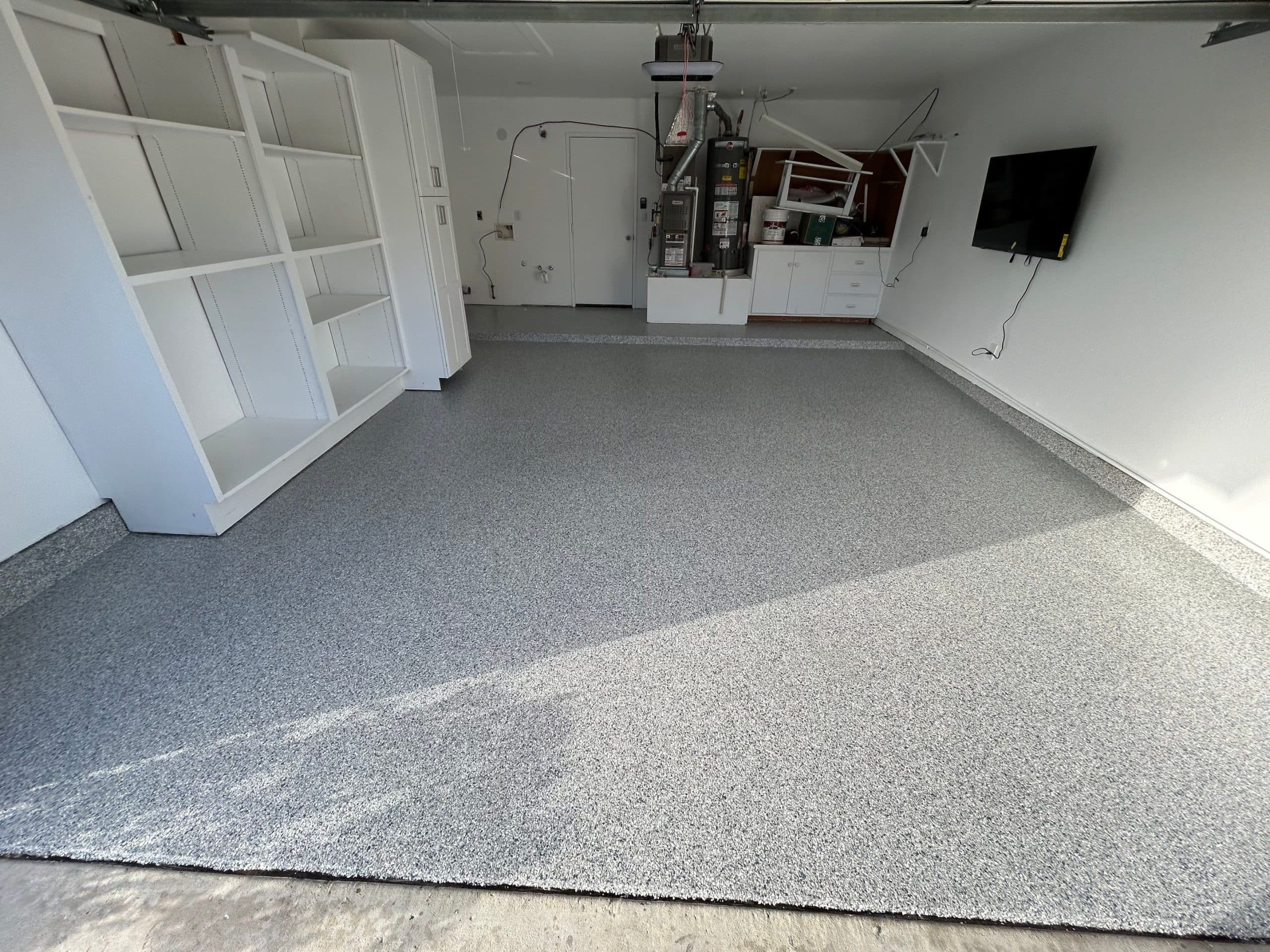
Polyurea and polyaspartic coatings are two related but distinct polymer systems that solve the yellowing problem at the chemistry level, not through additives. Polyurea (a flexible polymer that cures faster and bonds stronger than epoxy) is used as the base coat. Polyaspartic (an aliphatic coating engineered specifically for UV resistance) is applied as the topcoat. Together they form a layered system that doesn’t contain the aromatic structures responsible for epoxy yellowing.
Penntek Industrial Coatings builds this exact system, and North County Synthetic Coatings is San Diego County’s exclusive certified Penntek installer. The Penntek polyurea and polyaspartic system carries a 100% UV-stable rating, meaning it holds color under direct sun exposure without the chemical degradation that makes epoxy floors turn yellow over time. For homeowners in Rancho Santa Fe or Carlsbad who want a floor that looks the same in year eight as it did in year one, that stability isn’t a minor feature. It’s the whole point.
Beyond UV stability, the Penntek system is rated 4X stronger than traditional epoxy by the manufacturer, backed by a Limited Lifetime Warranty on every garage floor coating installation. The full job completes in a single day, and the surface is typically usable the same day. No multi-day cure window, no weekend lost.
If you’re a San Diego homeowner dealing with garage floor coating issues in Carlsbad or any surrounding community, the underlying question before choosing a coating system is whether it’s built for this climate. Epoxy isn’t. Polyurea and polyaspartic are.
Frequently Asked Questions
Can you fix an epoxy floor that has already turned yellow?
Yellowed epoxy can’t be restored to its original color. The discoloration is a chemical change in the coating itself, not a stain on the surface. The only real fix is removing the existing epoxy and replacing it with a UV-stable system. Grinding out the old coating and installing a polyurea and polyaspartic system gives you a fresh surface with lasting color stability.
How long does it take for epoxy floors to start yellowing?
Epoxy floor yellowing typically becomes noticeable within one to three years, depending on UV exposure, amine content in the specific product, and how much direct sunlight the floor receives. In San Diego County’s year-round sunshine, floors that receive regular afternoon sun often show visible discoloration within the first two years, sometimes sooner.
Does the Penntek coating system North County Synthetic Coatings installs ever yellow?
No. The Penntek polyurea and polyaspartic system installed by North County Synthetic Coatings is rated 100% UV stable, meaning it won’t yellow under sun exposure. The polyaspartic topcoat is an aliphatic coating that doesn’t contain the aromatic resin structures responsible for epoxy yellowing. That stability is backed by a Limited Lifetime Warranty on every garage floor installation.
Stop Paying to Replace a Floor That Shouldn’t Have Failed
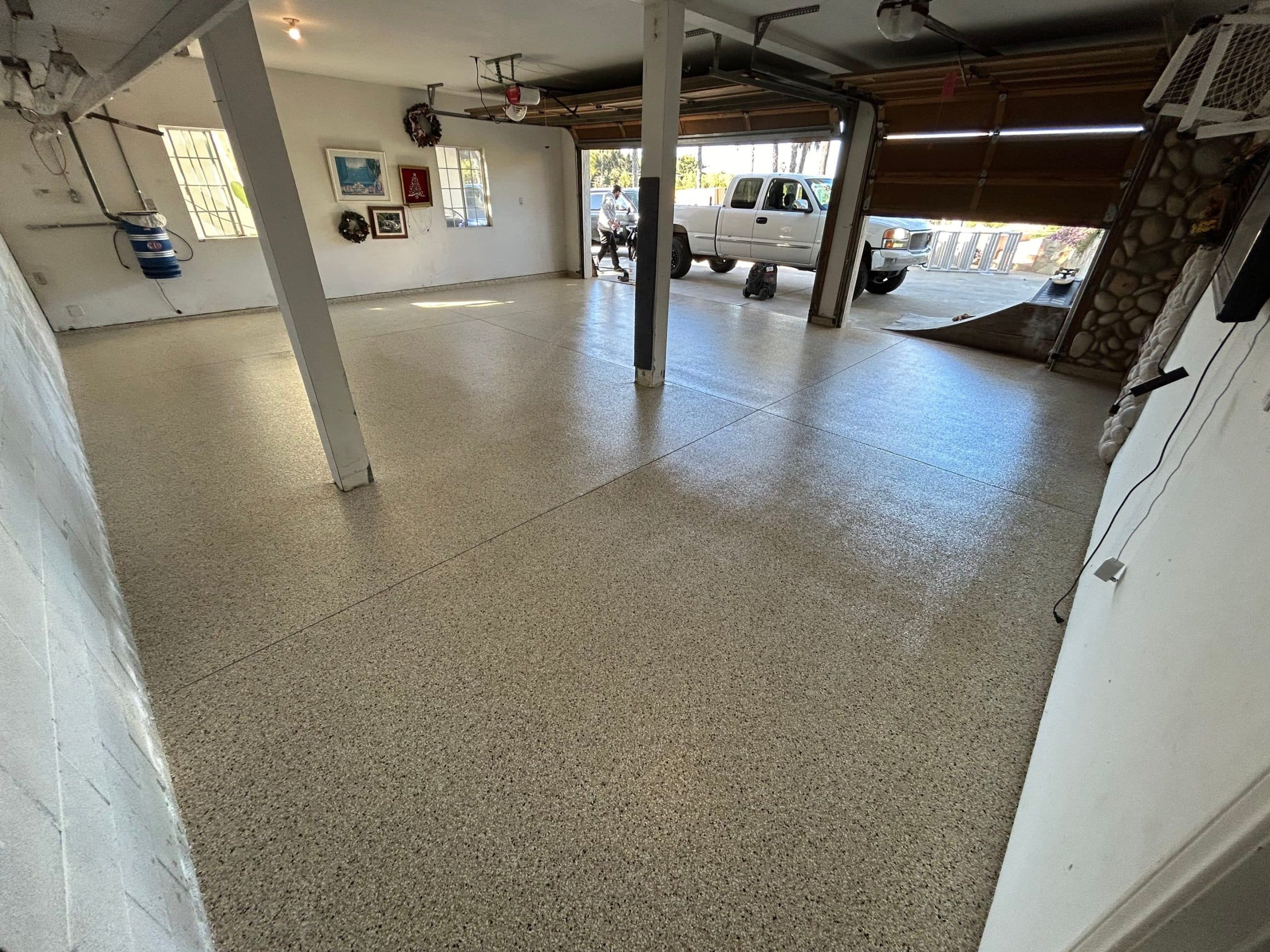
Epoxy floor yellowing is predictable. The fix isn’t a better cleaning routine or a UV-resistant topcoat. It’s choosing a coating system built for this climate from the start. North County Synthetic Coatings installs the Penntek polyurea and polyaspartic system for homeowners across San Diego County, finishing every job in a single day with a limited lifetime warranty.
Schedule your free estimate and find out what a UV-stable floor looks like in your garage.

Troy Rasmusen is a San Diego-based entrepreneur and the owner of North County Synthetic Coatings. Specializing in premium floor transformations, Troy combines technical expertise with a commitment to quality craftsmanship to help Southern California property owners elevate their spaces.