The best pool deck coating for San Diego homes is a polyurea or polyaspartic system that resists UV degradation, chlorine exposure, and heat. These coatings outperform epoxy and acrylic options in Southern California’s year-round sunny environment.
San Diego averages 266 sunny days per year, and coastal neighborhoods from Oceanside to La Jolla add salt-laden marine air to the mix. That combination breaks down standard pool deck coatings faster than any inland climate would. A coating engineered for this specific environment outlasts one designed for milder conditions by years. North County Synthetic Coatings, San Diego County’s concrete coating specialists, explains how each type stacks up against what the region puts a pool deck through.
What San Diego’s Climate Does to Pool Deck Coatings
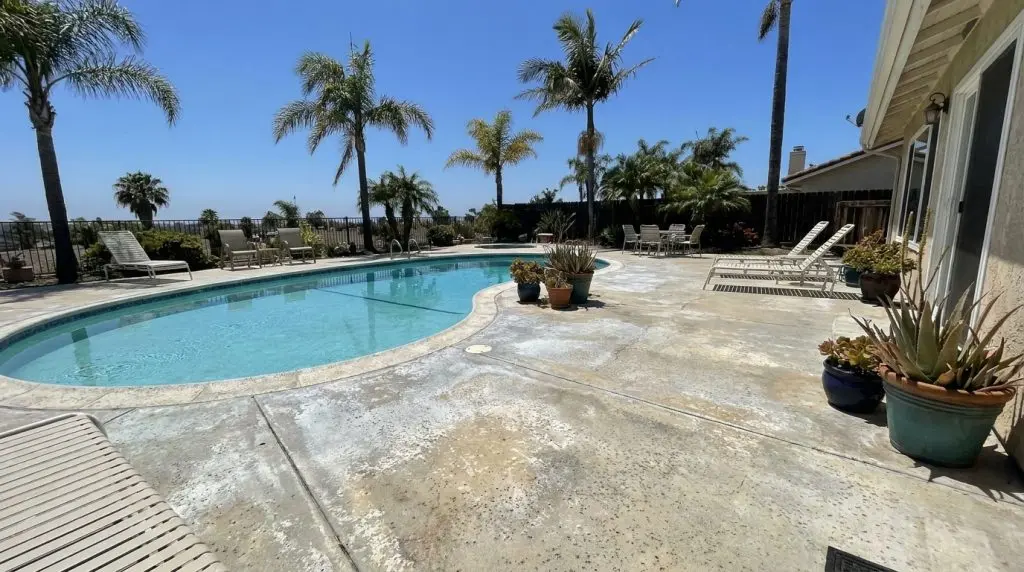
Pool decks here face three environmental stressors that work year-round, not just during summer:
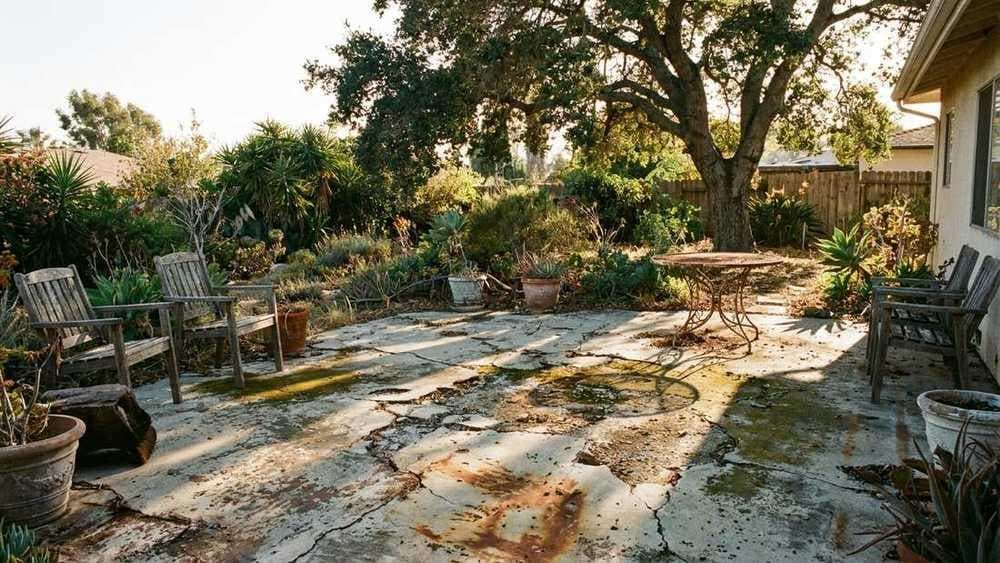
- UV radiation: Constant sun exposure breaks down the chemical bonds in most coatings, causing yellowing, chalking, and eventual peeling. Epoxy and basic acrylic sealers are most vulnerable because their molecular structure isn’t built for continuous outdoor UV.
- Salt air: Coastal communities experience salt-laden moisture that penetrates porous coatings and attacks the concrete underneath. Corrosion accelerates in neighborhoods within five miles of the coast, from Oceanside through Encinitas and into La Jolla.
- Pool chemicals: Chlorine splashout and pH-adjusted water sit on the deck surface daily. Coatings that aren’t chemically resistant soften, discolor, or delaminate where water pools near the coping.
A coating that handles all three simultaneously is the baseline requirement for any San Diego pool deck coating project.
Coating Types Compared for San Diego Pool Decks
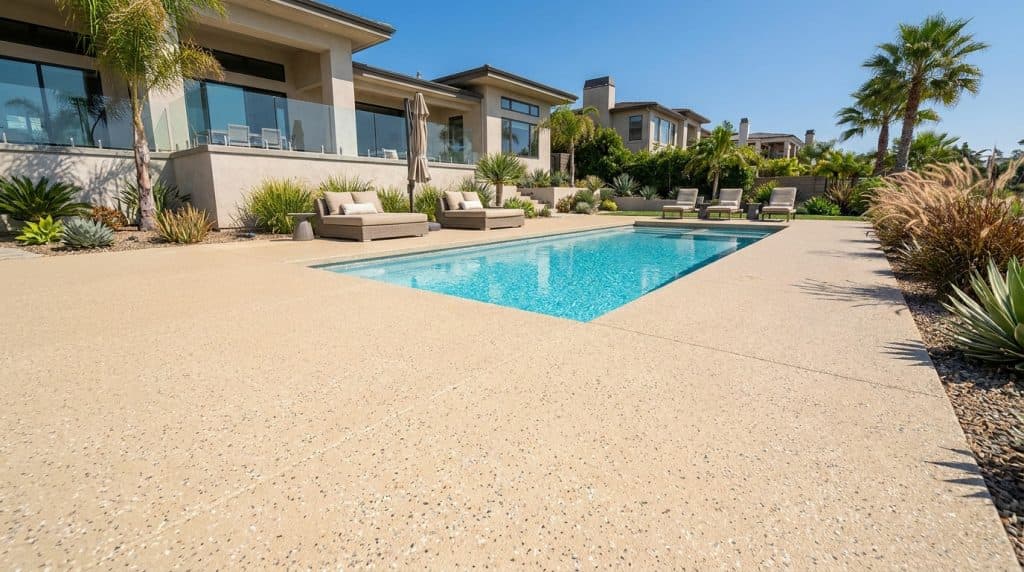
Not every coating chemistry performs equally under San Diego conditions. Here’s how the three most common options hold up.
Polyurea and Polyaspartic (Recommended)
Polyurea base coats bonded with polyaspartic topcoats deliver the strongest combination for San Diego pool deck coatings. The system is 100% UV-stable, resists chlorine and salt air, and provides built-in slip resistance through the flake texture. Flexibility is the key technical advantage: polyurea stretches over 300% before breaking, which means it moves with the concrete as temperatures shift across the slab throughout the day. The expected service life with proper prep is 15 to 20 years based on manufacturer specifications, with lifetime warranties available on premium systems. It can also be installed in one day.
Epoxy
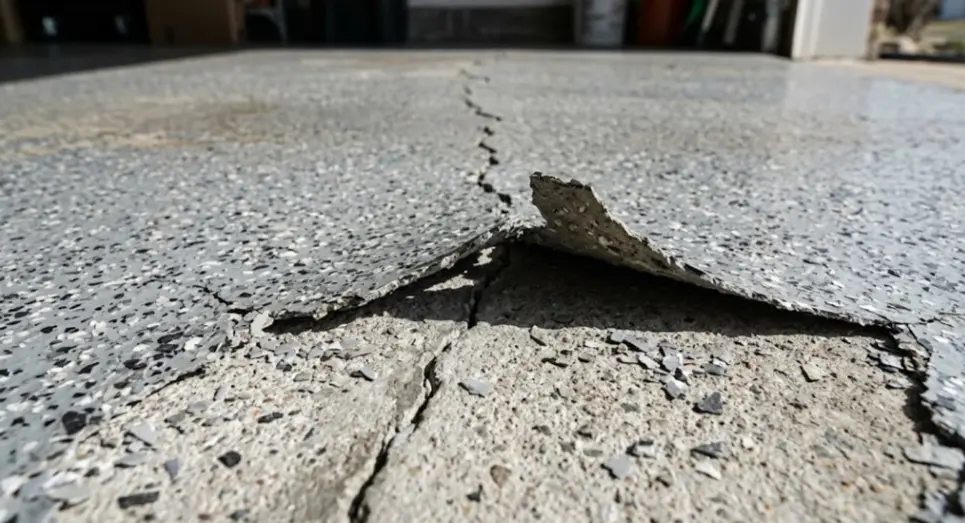
Epoxy costs less upfront but degrades quickly on outdoor pool decks exposed to direct sun. UV exposure noticeably yellows the surface within two to four years in San Diego, with full coating failure typically occurring within five to seven years. The rigid formula cracks as concrete expands and contracts in direct sunlight. Hot-foot discomfort is worse because epoxy absorbs and retains more heat than polyurea. Not recommended for San Diego outdoor applications.
Acrylic Sealers
Acrylic sealers cost $2 to $5 per square foot, making them an affordable option. They add basic UV protection and enhance the concrete’s natural color, but they typically need recoating every 3 to 5 years in San Diego’s intense sun (sooner near the coast). Multiple reapplications over a decade can match or exceed the cost of a single polyurea installation, depending on labor rates.
What to Look For When Choosing a Pool Deck Coating
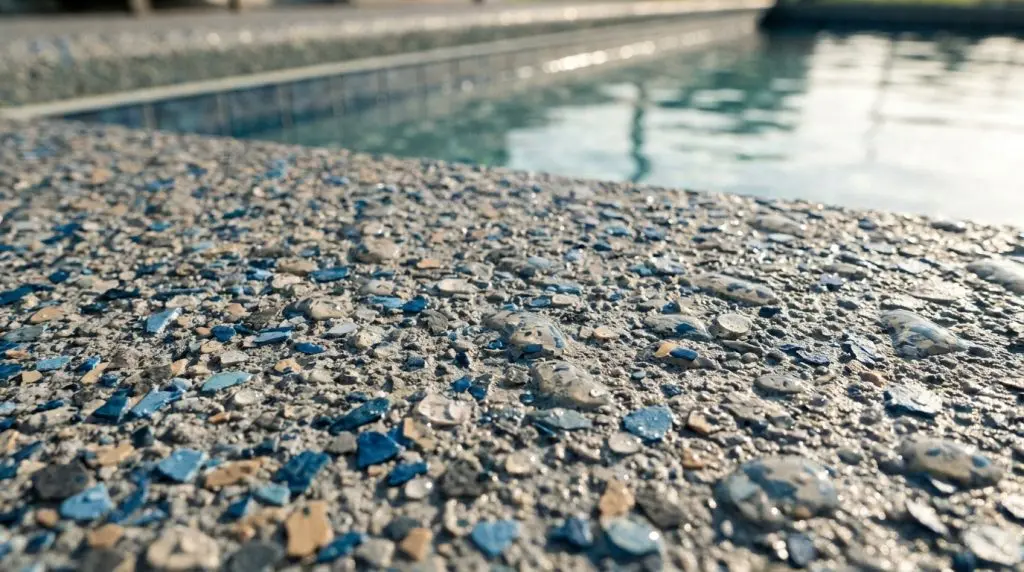
Five factors separate a pool deck coating that lasts from one that fails within a few years. The best pool deck coating companies in San Diego check every one of these:
- UV stability: The coating must be rated for continuous outdoor UV exposure. Ask the installer whether the product has been tested for color retention under accelerated UV cycling.
- Slip resistance: Pool decks get wet constantly. A textured flake finish or anti-slip additive is essential for bare-foot safety around the water.
- Chemical resistance: Chlorine, bromine, and pH-balancing chemicals must not soften or stain the coating surface over time.
- Flexibility: Rigid coatings crack on outdoor slabs that expand and contract daily. Look for elongation ratings above 200%.
- Warranty: A Limited Lifetime Warranty backed by the installer signals confidence in the system’s long-term performance under local conditions.
Frequently Asked Questions
How long does a pool deck coating last in San Diego?
Polyurea and polyaspartic coatings carry expected service life ratings of 15 to 20 years on San Diego pool decks when installed over properly prepped concrete. Epoxy typically shows significant UV degradation within 2 to 4 years outdoors, with full coating failure within 5 to 7 years in direct sun exposure. Acrylic sealers need recoating every 3 to 5 years in San Diego’s sun.
Is a coated pool deck slippery when wet?
Not with the right system. Polyurea coatings with a full decorative flake broadcast create a naturally textured surface that provides grip even when wet. North County Synthetic Coatings uses Penntek’s flake system, which builds slip resistance directly into the finish without a separate additive.
Can I coat a pool deck that already has an old sealer on it?
Yes, if the old sealer is removed or ground down during surface prep. Proper preparation ensures the new coating bonds directly to the concrete underneath. Applying a new coating over a failing sealer leads to delamination within months, so removal is a required step.
Protect Your Pool Deck for the Long Haul
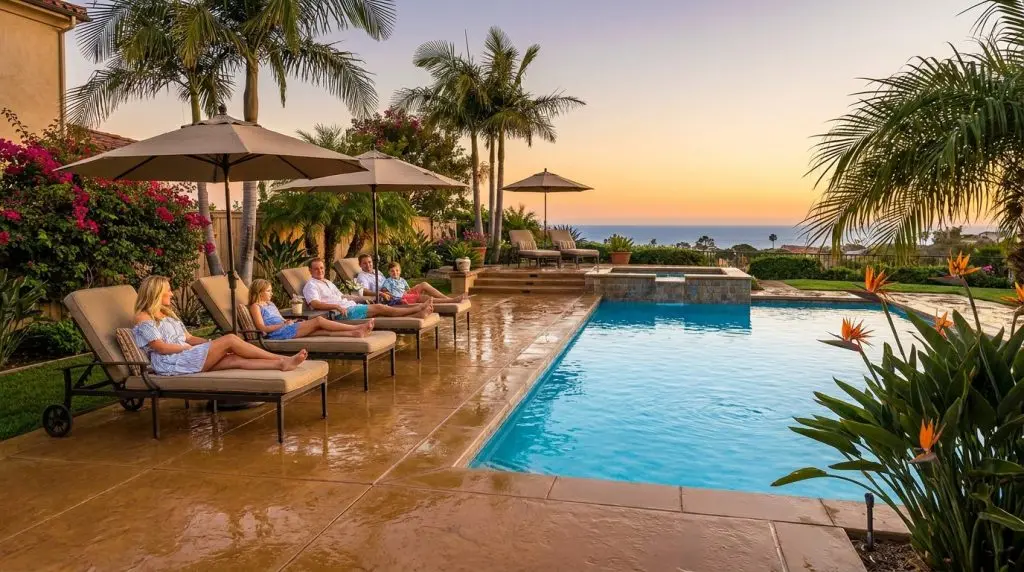
The right pool deck coating handles San Diego’s UV, salt air, and pool chemicals without resealing, yellowing, or losing grip. A polyurea system with a polyaspartic topcoat checks every performance box for this climate: 100% UV-stable, chemically resistant, flexible enough to move with the slab, and slip-resistant from the factory.
Contact North County Synthetic Coatings for a free pool deck estimate, or call (760) 618-1188.

Troy Rasmusen is a San Diego-based entrepreneur and the owner of North County Synthetic Coatings. Specializing in premium floor transformations, Troy combines technical expertise with a commitment to quality craftsmanship to help Southern California property owners elevate their spaces.