San Diego’s coastal climate imposes three forces on a garage floor coating that wreck the wrong product within two years. UV radiation yellows and cracks standard epoxy, salt air pits and spalls unsealed concrete, and marine-layer humidity gets trapped under coatings applied to damp slabs, causing them to peel. A polyurea and polyaspartic system beats all three. The polyurea base seals out salt and moisture, and the aliphatic polyaspartic topcoat won’t absorb the UV wavelengths that cause yellowing.
That’s why coating choice matters more on the coast than almost anywhere else. These aren’t seasonal threats. They run 365 days a year within a few miles of the water. North County Synthetic Coatings installs Penntek polyurea and polyaspartic garage floor coatings built for exactly these conditions. Below, we share how each threat breaks down a coating and the material chemistry that stops it.
How UV Exposure Breaks Down Garage Floor Coatings
San Diego averages roughly 266 sunny days per year, and UV indexes regularly climb above 8 during summer months. That level of exposure breaks molecular bonds in aromatic coatings like standard epoxy, causing the finish to yellow, chalk, and eventually crack.
The issue is the coating’s chemical backbone. Aromatic polyurea and most epoxy resins absorb UV energy, which triggers photodegradation. Over 12 to 24 months of direct sun, the surface loses gloss and turns amber. Garages with south- or west-facing doors in Encinitas, Carlsbad, and La Jolla see yellowing on epoxy floors faster because the slab catches the afternoon sun for hours each day.
Aliphatic polyaspartic topcoats, like the one in Penntek’s system, resist UV at the molecular level. They don’t absorb the wavelengths that cause yellowing, so the finish holds its color and gloss for years without a separate UV-blocking sealer.
What Salt Air Does to Uncoated and Poorly Sealed Concrete
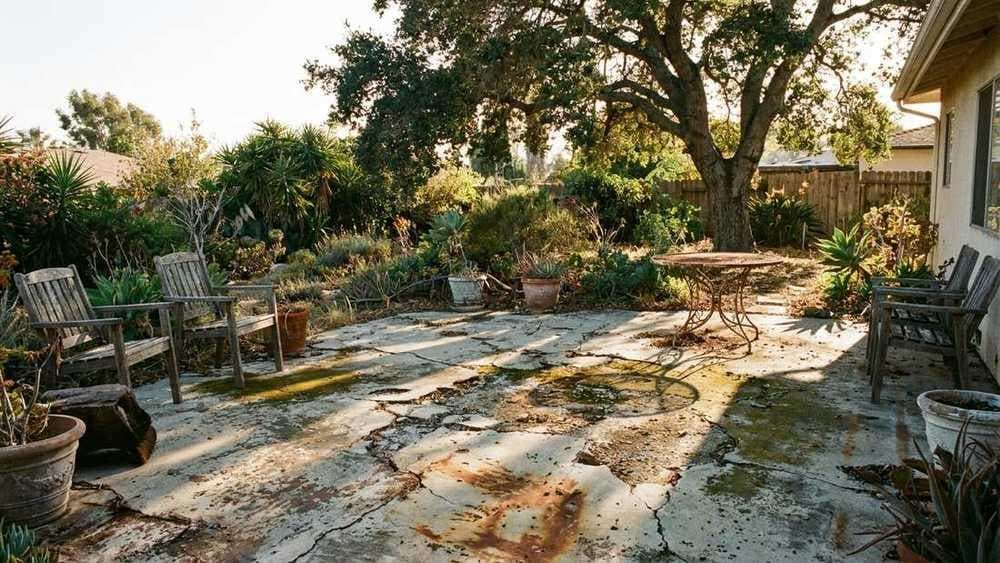
Salt-laden marine air travels several miles inland from the San Diego coast. When it settles on unsealed concrete, salt crystals absorb moisture, expand, and create micro-fractures in the surface. Over time, this causes pitting, spalling, and visible erosion.
A sealed concrete surface stops that cycle. Penntek’s polyurea base coat creates a non-porous barrier that salt can’t penetrate, bonding directly to diamond-ground concrete so the seal sits inside the substrate rather than on top of it. Concrete coating services near Encinitas address this exposure head-on because coastal garages face salt air 365 days a year.
Without a continuous, non-porous coating, concrete within a few miles of the water in Oceanside, La Jolla, and Carlsbad degrades faster than most homeowners expect.
Marine Layer Humidity and Coating Adhesion Failure
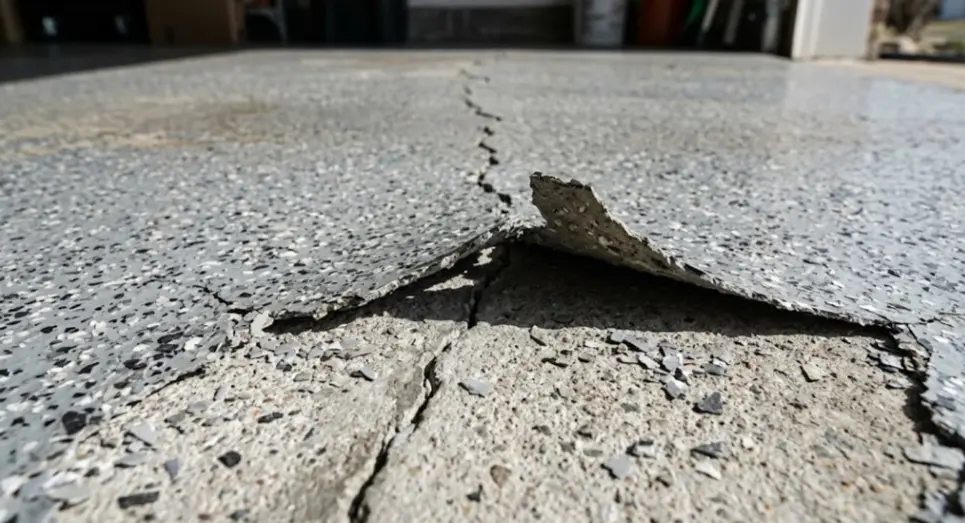
San Diego’s morning marine layer pushes humidity above 80% along the coast, and that moisture condenses on cool concrete overnight. If a coating is applied over damp concrete without proper moisture testing, water vapor gets trapped beneath the finish. The result is delamination and adhesion failure within months.
North County Synthetic Coatings tests every slab for moisture before applying any coating. Diamond grinding to a CSP 3 profile removes surface contaminants and opens the pores so the polyurea base coat bonds mechanically and chemically, preventing the bubbling and outgassing on coated floors that plague rush installations.
Polyurea also tolerates a wider humidity range during application than standard epoxy. Epoxy needs humidity below 85% and temperatures above 50°F to cure properly. Penntek’s system cures reliably at higher humidity levels, which means coastal installations don’t need to wait for ideal weather windows.
Frequently Asked Questions
Does salt air damage a coated garage floor?
Salt air does not damage a properly sealed garage floor because the polyurea coating creates a non-porous barrier blocking salt penetration into the concrete. Without that seal, salt particles absorb moisture and expand inside the pores, causing pitting and spalling over one to three years in coastal San Diego. North County Synthetic Coatings’ Penntek system seals the surface completely after diamond grinding removes the entry points salt exploits.
How long does a polyurea garage floor coating last in San Diego?
A professionally installed polyurea garage floor coating in San Diego typically lasts 15 to 20 years when the concrete is properly prepped with diamond grinding and moisture testing. The Penntek system’s polyaspartic topcoat is 100% UV stable, preventing the yellowing that shortens standard epoxy’s lifespan to roughly 5 to 10 years. North County Synthetic Coatings backs every garage floor installation with a Limited Lifetime Warranty.
Can you apply a garage floor coating during marine layer season?
You can apply a polyurea garage floor coating during San Diego’s marine layer season because polyurea tolerates higher humidity than epoxy during application. Epoxy requires humidity below 85% and stable temperatures, which limits coastal installation windows in spring and early summer. Penntek’s system cures in hours regardless of morning fog, so installations don’t need to be rescheduled around weather.
Coastal Conditions Demand a Coastal-Grade Coating
UV, salt air, and marine-layer humidity don’t take a season off in San Diego. They work on your garage floor every day, and the wrong coating gives out in under two years. A polyurea and polyaspartic system answers each threat with its own layer: the polyurea base seals salt and moisture out of the concrete, and the polyaspartic topcoat shrugs off the UV that turns ordinary epoxy amber. That’s the difference between a floor that holds its color for 15-plus years and one you’re recoating before it’s broken in.
Built for the coast, installed with the diamond grinding and moisture testing these slabs actually need. Contact North County Synthetic Coatings at (760) 618-1188 or schedule a free estimate to protect your San Diego garage floor.

Troy Rasmusen is a San Diego-based entrepreneur and the owner of North County Synthetic Coatings. Specializing in premium floor transformations, Troy combines technical expertise with a commitment to quality craftsmanship to help Southern California property owners elevate their spaces.