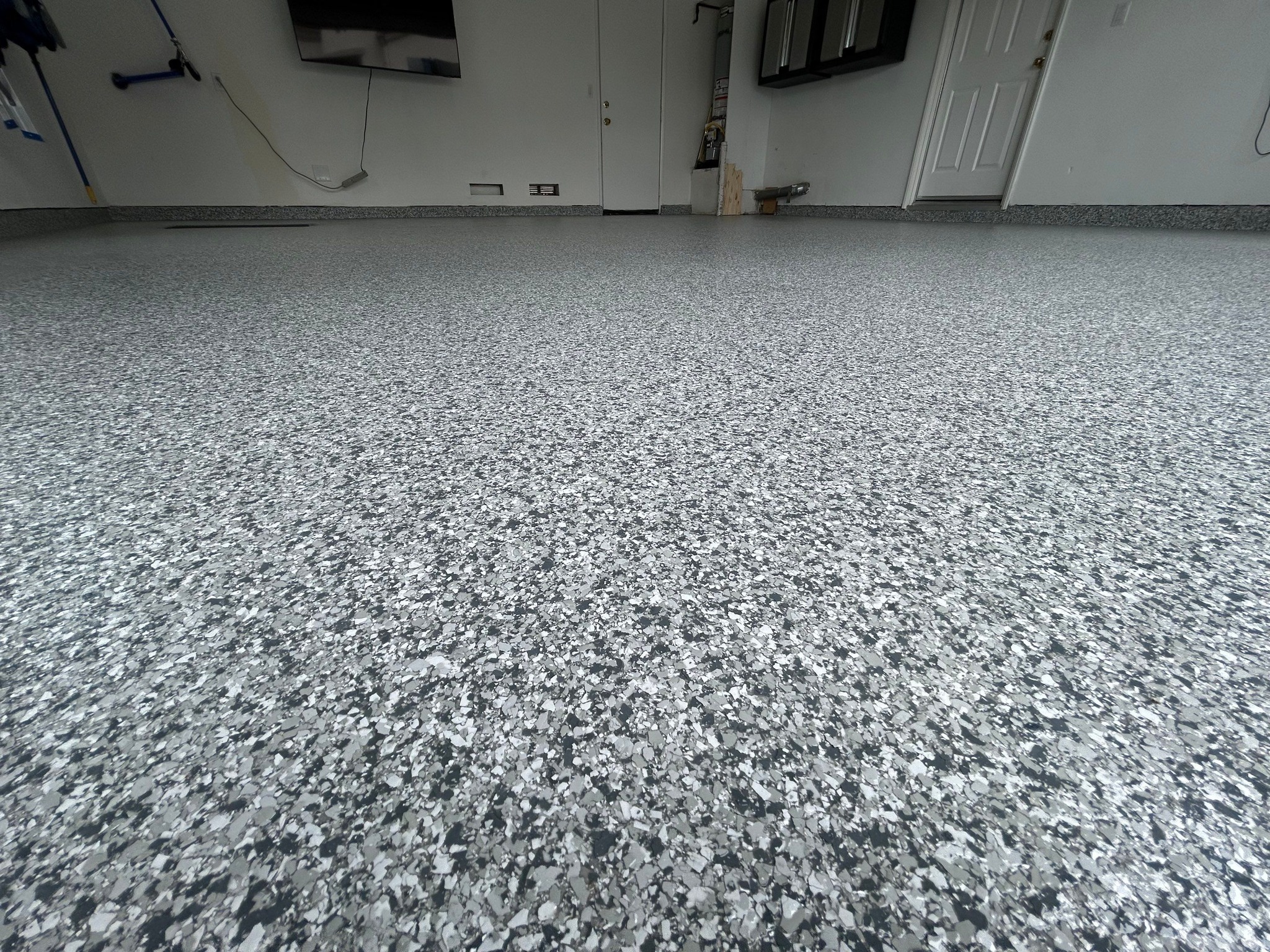
Many of the peeling garage floors that North County Synthetic Coatings gets called to assess in San Diego County share the same root cause. The culprit isn’t usually the product, but the prep work underneath. After installing and repairing coatings across communities from Vista to La Jolla, we can usually identify the failure point before we even touch the floor.
This guide covers why epoxy garage floors peel, what’s happening beneath the surface, and how to fix it permanently.
Poor Surface Prep: The Real Reason Most Epoxy Garage Floors Peel
Homeowners typically assume their garage floor is peeling because the coating was low quality. Sometimes that’s true, but based on our experience across San Diego, the product isn’t usually the problem. It’s surface preparation.
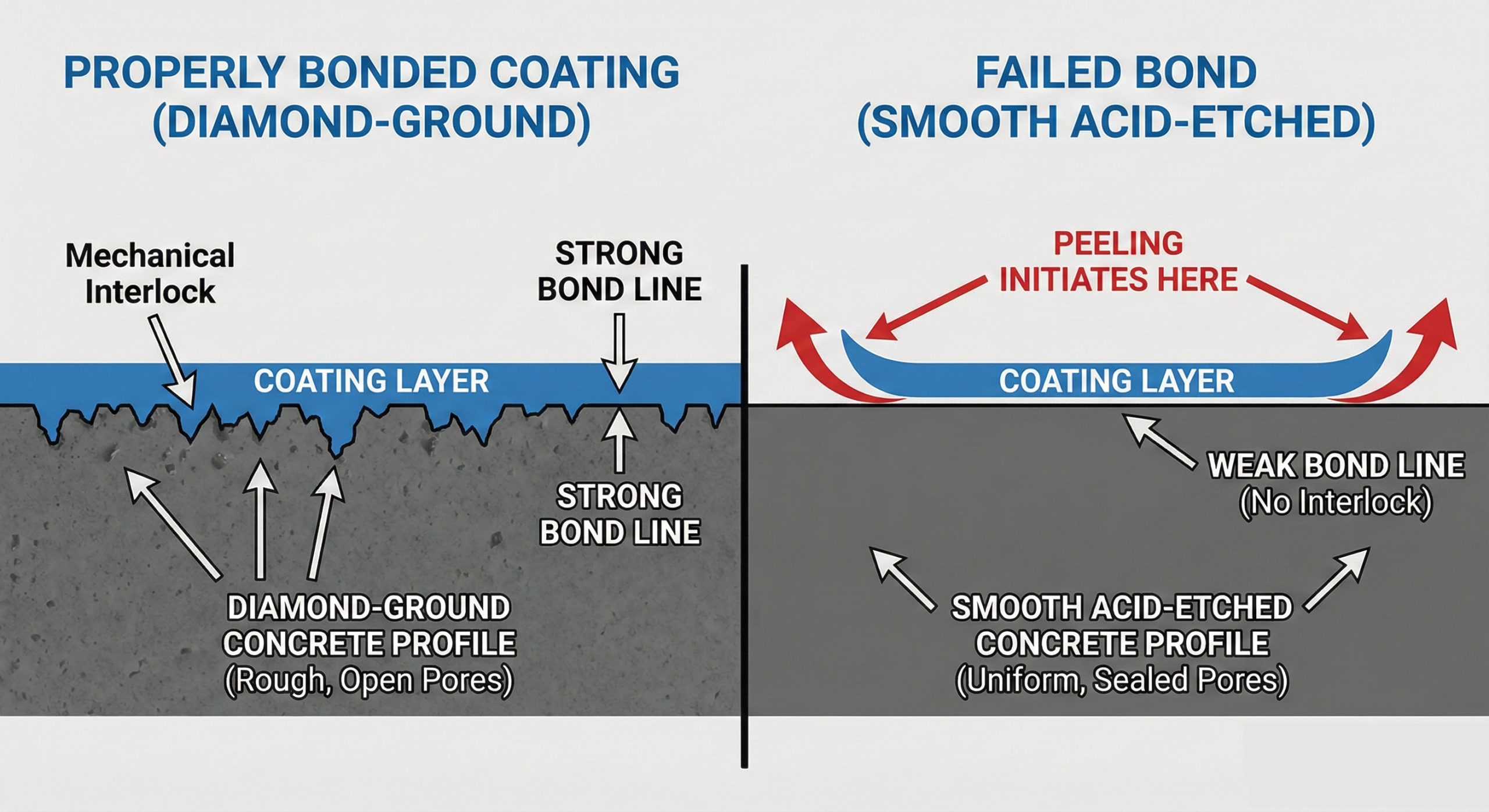
Epoxy and polyurea coatings both need a clean, porous concrete surface to bond properly. That requires mechanical profiling, a process that uses an industrial diamond grinder to open the concrete’s pores and create micro-texture for the coating to lock into.
When installers skip this step or substitute acid etching (a chemical wash that cleans the surface but doesn’t create adequate grip), the coating sits on top of the concrete rather than bonding into it. Temperature changes, vehicle weight, and daily use create stress at that weak bond line, allowing the coating to start lifting in sheets.
The telltale sign is peeling that starts in large flakes near the garage door opening, where UV and temperature shifts are most extreme.
Moisture: The Hidden Cause You Can’t See
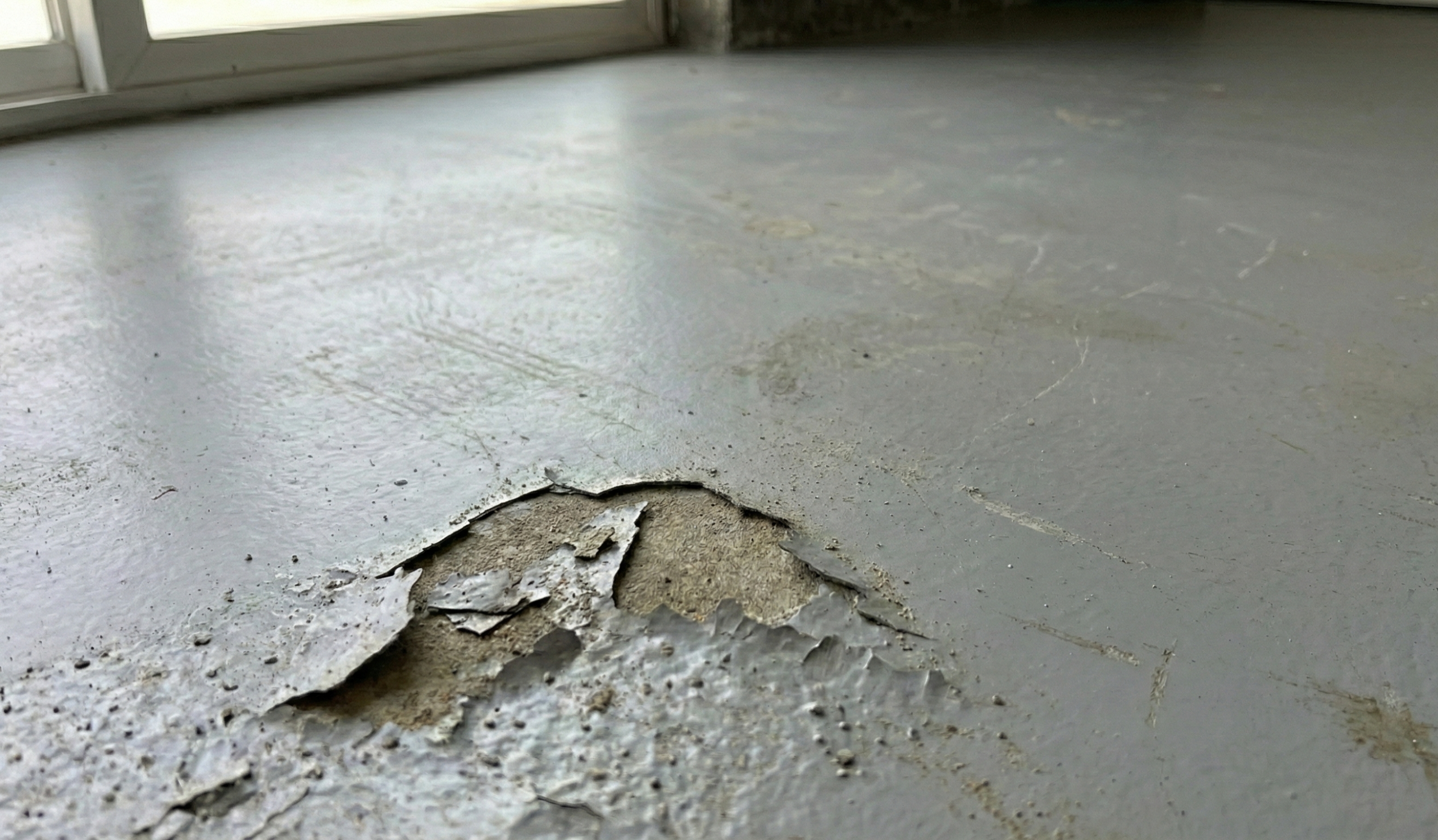
Poor surface prep is the most visible failure point, but moisture is the one you never see coming. In San Diego, it’s more common than most homeowners expect.
Water vapor naturally migrates upward through concrete, a process called moisture vapor transmission. When a coating seals the surface before that moisture is accounted for, vapor pressure builds beneath the coating and breaks the bond from underneath.
In coastal San Diego communities, morning marine layer and ambient humidity can raise the moisture content of concrete slabs, especially in garages that sit at or below grade or lack adequate vapor barriers beneath the slab. Professional installers test for moisture vapor transmission rates before applying any coating material. If the numbers come back too high, mitigation measures—like moisture-blocking primers—must be adopted before installation can move forward.
Hot Tires, UV, and Chemical Damage
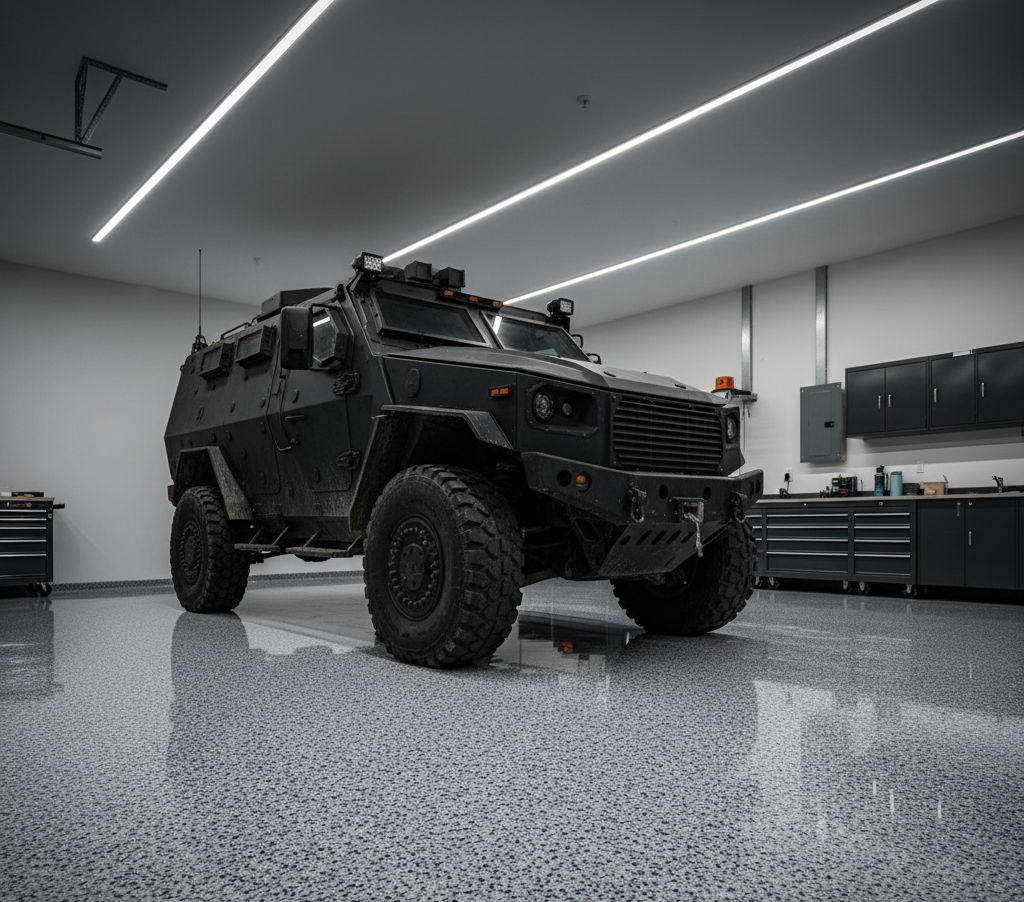
Whether from poor prep or hidden moisture, secondary stresses accelerate the failure once the bond is compromised. Each one is manageable on a properly installed floor. On a weakened one, they become the reason you’re calling for a repair.
Hot Tire Pickup
Epoxy softens when it heats up. When a vehicle pulls in from a drive and parks on the garage floor, heat from the tires can soften the epoxy enough for the rubber to grip and pull the coating off the slab. Hot tire pickup happens daily in San Diego, where afternoon temperatures push into the 70s and 80s even during winter months.
UV Exposure and Chemical Damage
UV exposure through open garage doors causes epoxy to yellow and become brittle over time. Oil drips, brake fluid, and cleaning solvents eat into weakened epoxy that’s already lost its protective integrity. None of these forces alone would cause a properly bonded, UV-stable coating to fail. But on a floor with inadequate prep, they can turn a minor bond weakness into visible peeling within months.
How To Fix a Peeling Garage Floor Permanently
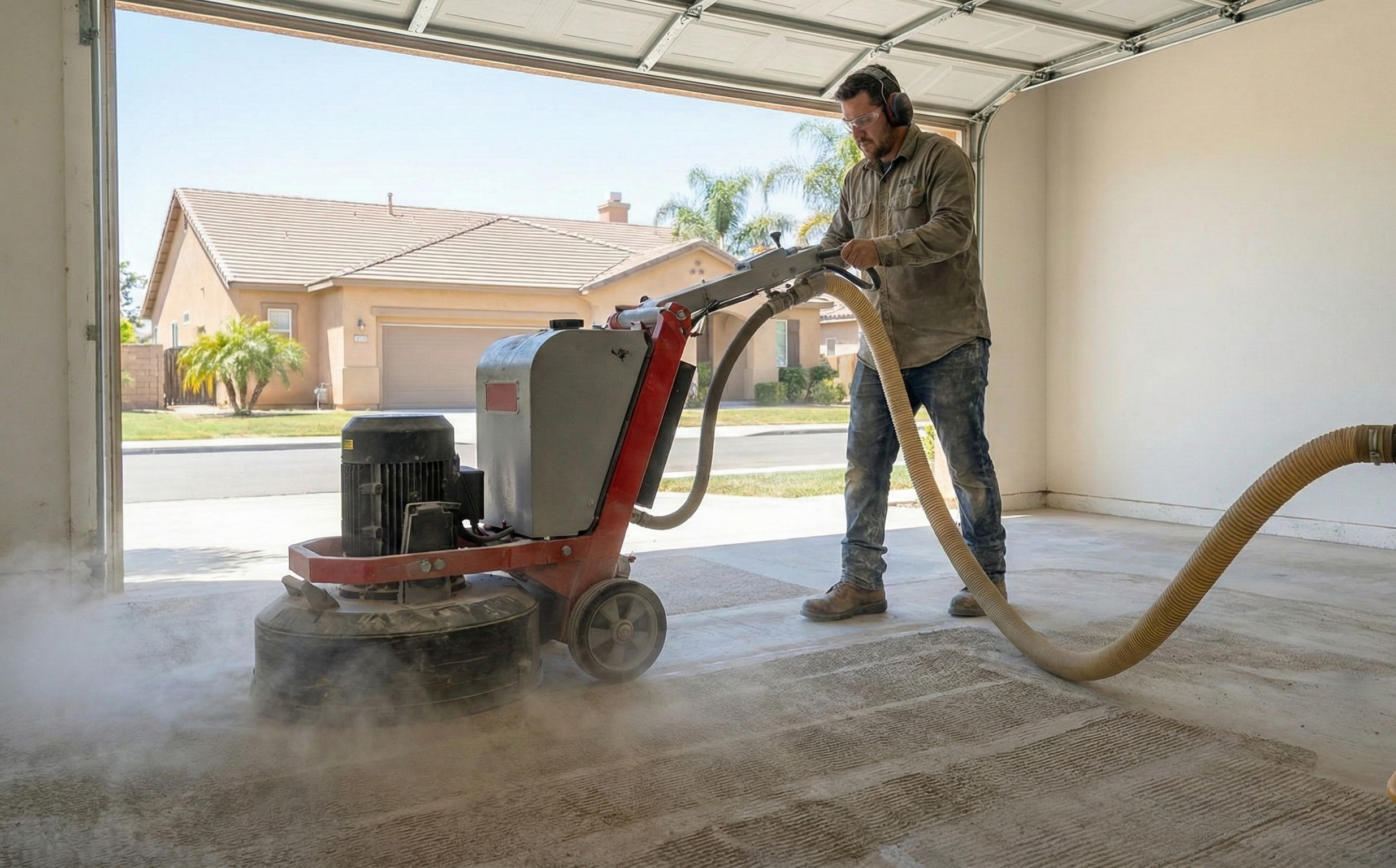
Recoating over a peeling floor without full removal guarantees another failure. The old coating must come off completely, and the concrete underneath needs proper profiling before any new material goes down.
North County Synthetic Coatings strips failed coatings using industrial diamond grinders (a 30-inch machine for the field plus hand grinders along every edge and corner) to remove old material and create the mechanical profile the concrete needs for proper adhesion. From there, the repair process follows a specific sequence:
- All cracks and pits get filled with mender compound, allowed to cure, and ground smooth
- A Penntek polyurea base coat bonds directly to the freshly profiled concrete
- A full broadcast of decorative flake is applied
- A polyaspartic topcoat delivers a glass-like, slip-resistant finish
Polyurea, a flexible polymer coating 4X stronger than traditional epoxy, is far more resistant to hot tire pickup and UV yellowing than traditional epoxy. The entire installation takes one day, and every system carries a limited lifetime warranty.
Get Long-Term Results Built to Resist Peeling
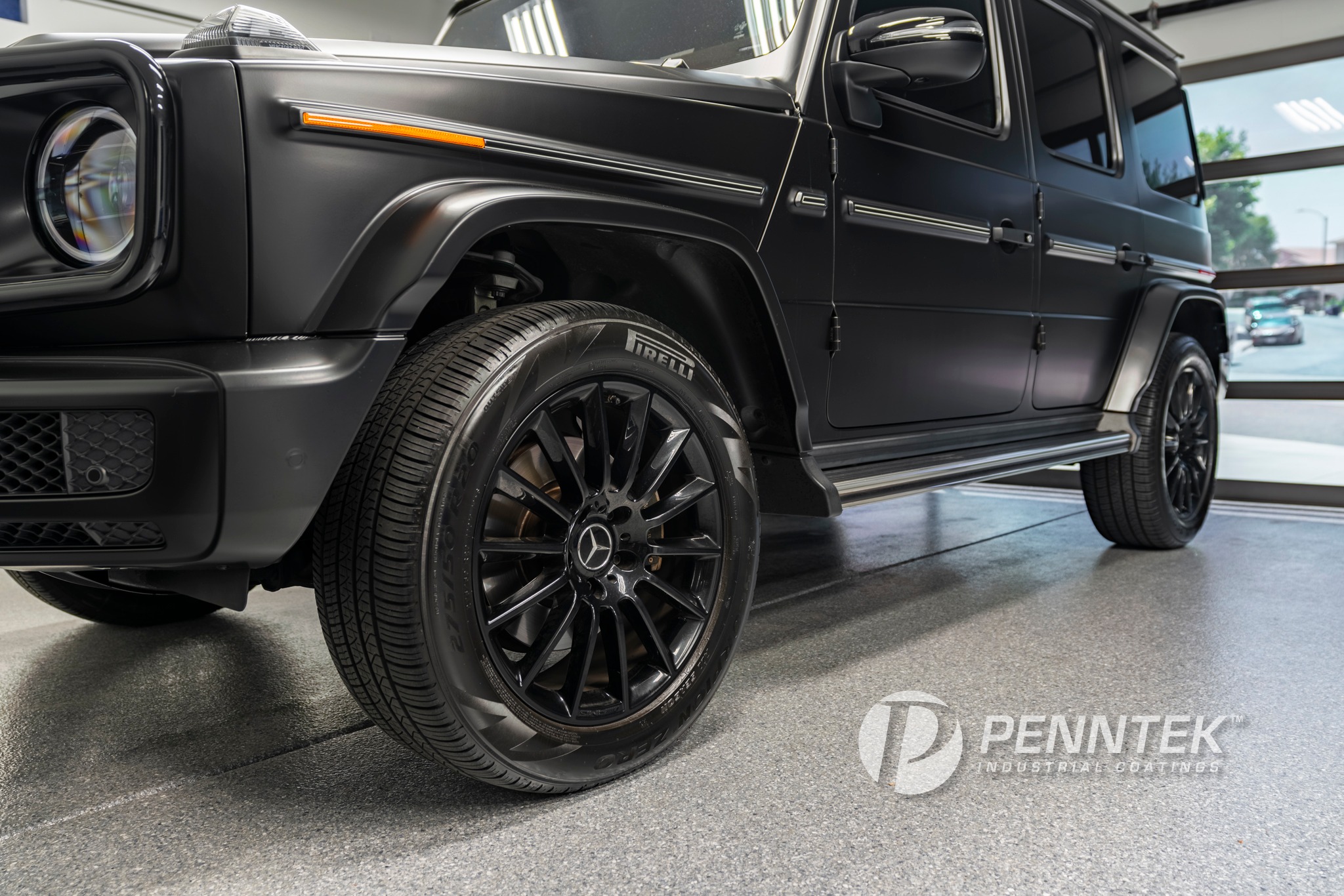
When epoxy garage floors peel, the issue is often rooted in poor prep, moisture, or both. The permanent fix involves complete removal, proper diamond grinding, moisture testing, and a coating system built for San Diego’s UV intensity and year-round warmth.
Contact North County Synthetic Coatings for a free assessment of your garage floor.