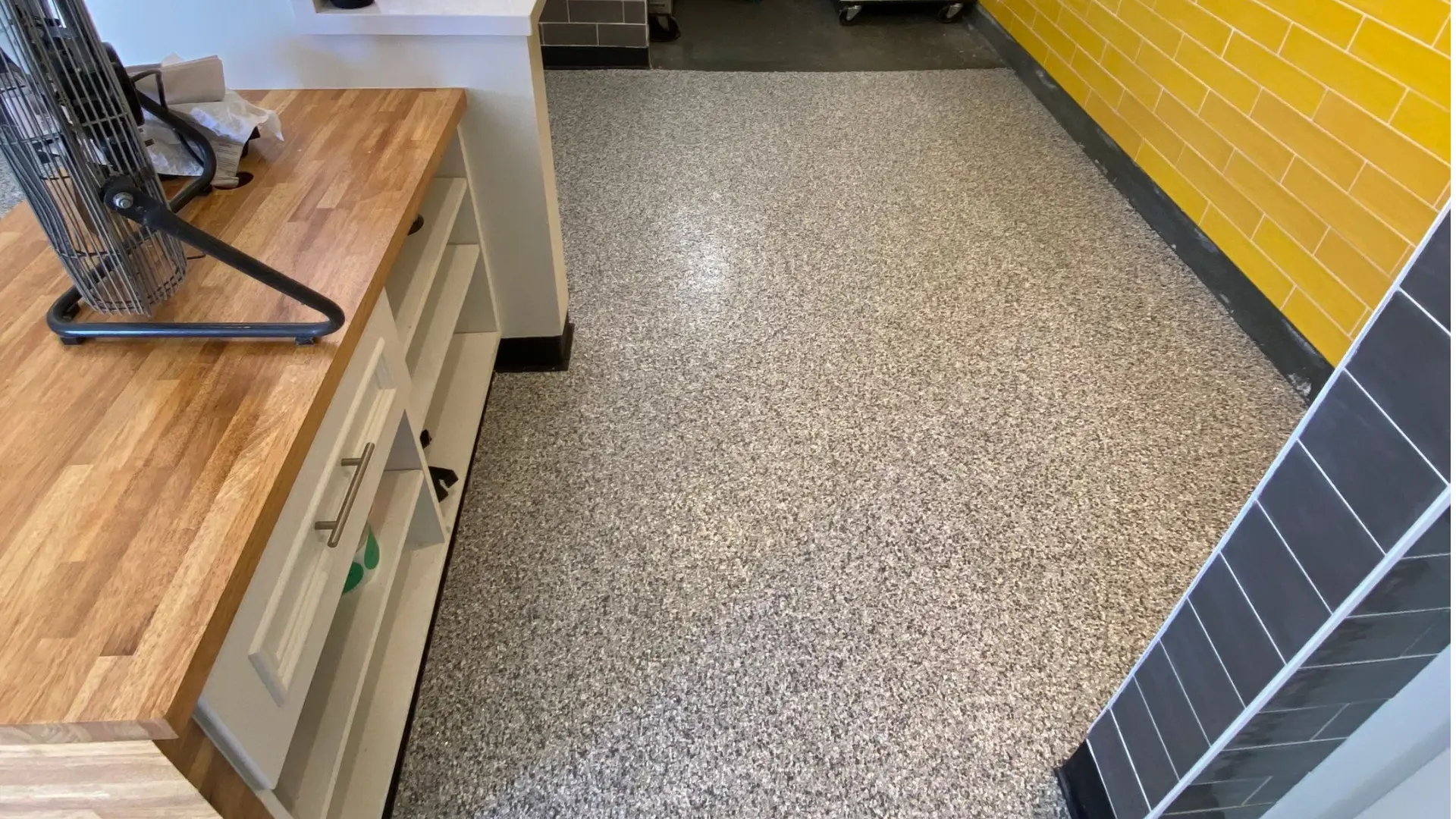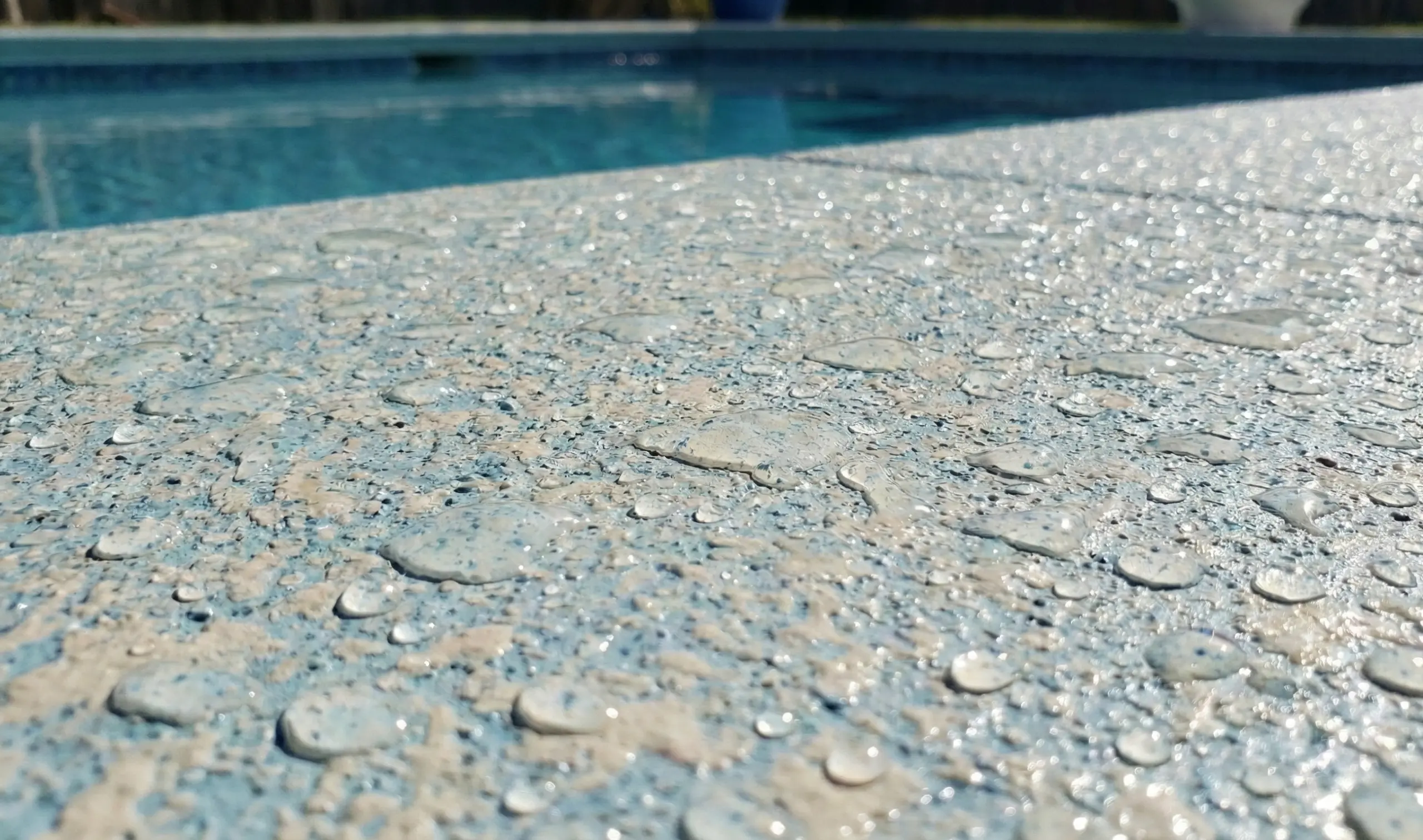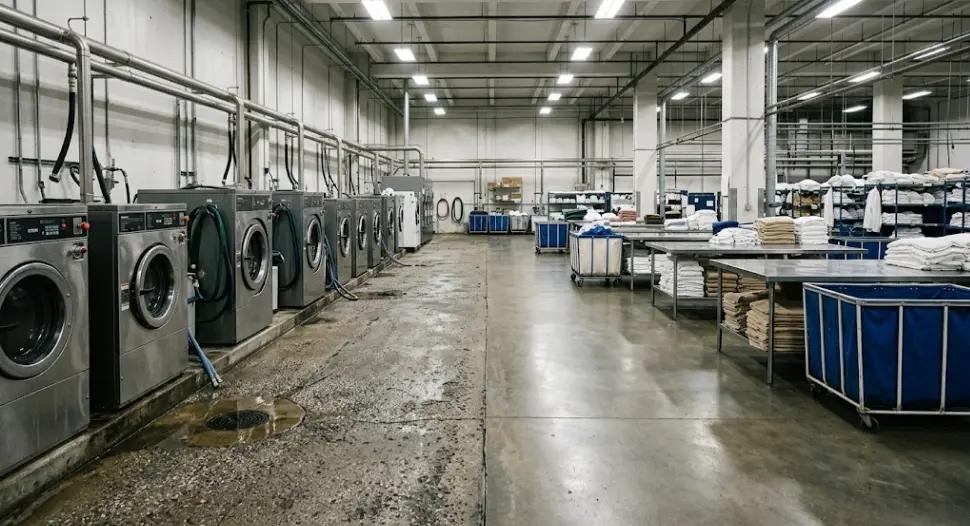
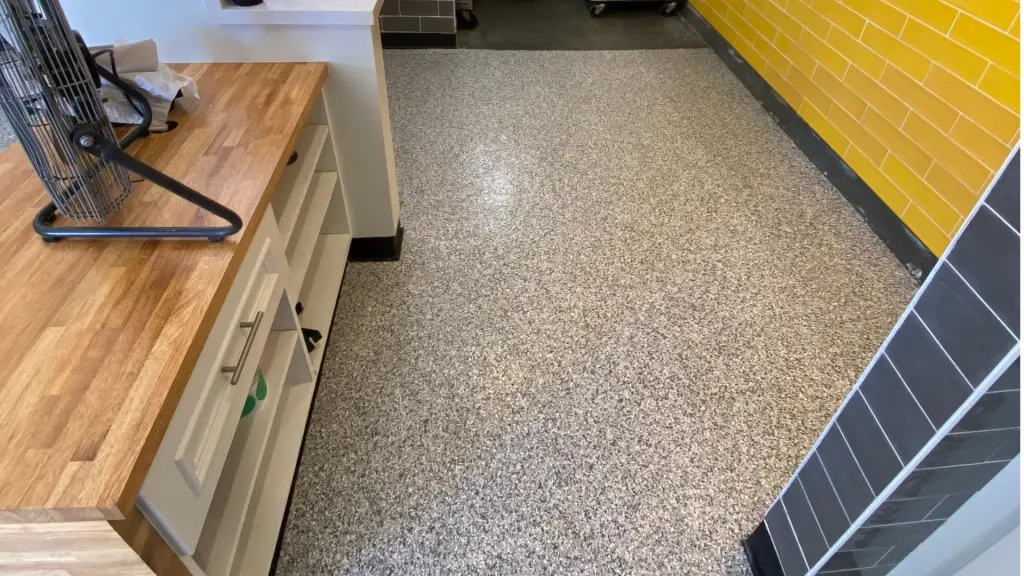
Restaurant and food-service kitchens put more stress on a floor than almost any other commercial space. Grease, hot water, steam, constant foot traffic, and strict cleanability expectations all narrow down which flooring systems actually hold up. North County Synthetic Coatings works with commercial kitchens and food prep areas throughout San Diego County, including Downtown San Diego, La Jolla, Chula Vista, Poway, El Cajon, and surrounding communities, installing commercial concrete coatings built for demanding back-of-house conditions.
The short answer: the right coating depends on the exposure zone. Match the system to grease and moisture levels, cleaning chemicals, hot-water or steam exposure, required traction, drain locations, and how much downtime the kitchen can tolerate. In San Diego, the floor also has to meet local cleanability rules, including smooth, impervious surfaces and coved transitions in applicable food-prep and wash areas.
What San Diego Food-Service Floors Are Required to Do
Before comparing coating products, it helps to know the baseline. County of San Diego guidance states that floors in food-preparation, storage, dishwashing, and bar areas must be smooth, durable, impervious to water, grease, and acid, and easily cleanable. The same guidance calls for a continuous coved base where the floor meets the wall in prep and wash areas, and generally does not accept thin rolled, brushed, or sprayed paint coatings as a stand-alone finish in heavy food-prep zones.
That distinction matters. A cosmetic coating might look fine on day one, but a kitchen-ready floor needs to hold up to constant washdowns and meet those cleanability and coving requirements over the long run. This is also why a coating should be treated as part of the floor system, not a substitute for the kitchen’s drainage, spill-control, or sanitation plan.
Match the Coating to the Zone, Not One Product to the Whole Kitchen
One of the most common planning mistakes is picking a single finish for the entire kitchen. Different areas of a commercial kitchen face different demands:
- Wet, grease-prone work areas (cook lines, dish pits) need a traction profile that supports slip resistance while still staying cleanable.
- Areas under fixed equipment and dry storage typically need a smooth, easy-to-clean surface rather than maximum texture.
- Zones with heavy hot-water washdowns, steam, or thermal shock need a system rated for that kind of repeated heat and moisture cycling. Manufacturer guidance on commercial kitchen flooring points to urethane-cement systems with broadcast aggregate as one option built for these demanding back-of-house conditions. If your kitchen runs hot-water or steam cleaning cycles regularly, it is worth asking any contractor how their proposed system handles that specific stress, since not every resin-based coating is rated for it.
For kitchens where exposure stays within grease, moisture, and standard washdown conditions rather than extreme thermal cycling, a fast-cure resin system can be a strong fit. For facilities weighing these options against standard painted epoxy, our breakdown of when standard epoxy is not the right commercial floor choice walks through where thin paint coatings tend to fall short in sanitation-sensitive spaces.
Our Commercial Kitchen Coating Approach
For commercial kitchen and food prep projects, our evaluation starts with moisture and surface-hardness testing, since slab moisture and substrate condition affect how well any coating performs over time. Our standard commercial system is a Penntek industrial-grade polyurea base coat paired with a quick-cure polyaspartic top coat, with flake broadcast that can be customized for slip resistance in the zones that need it. Preparation typically includes mechanical diamond grinding of the slab and repair of cracks or pits with mender material before the base coat goes down, which is what a scope review should confirm before comparing bids. You can see this process in more detail on our concrete coating preparation page.
For qualifying commercial scopes, installation can be scheduled in a single day, with night and weekend appointments available to help reduce disruption to kitchen operations. As the exclusive certified Penntek installer in the San Diego region, we bring that system-specific experience to commercial kitchen flooring projects. More detail on our broader commercial capabilities is available on our commercial concrete coating page.
What Changes the Scope and Timeline
Installed price alone rarely tells the full story on a commercial kitchen project. A few site conditions commonly add scope or time:
- Removal of an existing coating or finish before the new system goes down
- Crack or spall repair identified during surface preparation
- Moisture-related issues found during testing
- Drain detailing and the transitions around them
- The texture level chosen for different zones
- Phased work or off-hours scheduling to keep the kitchen operating
Flagging these upfront during a site evaluation makes it easier to compare bids accurately and plan around the kitchen’s operating schedule. A coating also will not replace the facility’s drainage, spill-control, or wastewater obligations, so it is worth coordinating flooring decisions with whatever sanitation plan the kitchen already has in place.
Common Questions
Does a commercial kitchen floor need a coved base in San Diego?
In food-prep and wash areas, County guidance calls for a continuous coved base where the floor meets the wall, as part of keeping those surfaces smooth, impervious, and cleanable.
When should I ask about a heavier-duty system like urethane cement instead of a standard resin coating?
If the kitchen regularly runs hot-water washdowns, steam, or sees high heat and thermal shock, it is worth asking how a proposed system handles that specific stress, since manufacturer guidance points to urethane-cement systems as one option built for those conditions.
What site conditions can extend a commercial kitchen floor-coating project?
Existing coating removal, crack or spall repair, moisture findings, drain detailing, chosen texture level, and phased or off-hours scheduling can all add scope and time beyond a basic install.
Get a Floor Built for Your Kitchen
If you operate a commercial kitchen or food prep facility anywhere in San Diego County, from La Jolla and Chula Vista to Poway, El Cajon, and the surrounding region, call North County Synthetic Coatings at (760) 618-1188 to talk through your floor’s exposure zones and get a free estimate.

Troy Rasmusen is a San Diego-based entrepreneur and the owner of North County Synthetic Coatings. Specializing in premium floor transformations, Troy combines technical expertise with a commitment to quality craftsmanship to help Southern California property owners elevate their spaces.