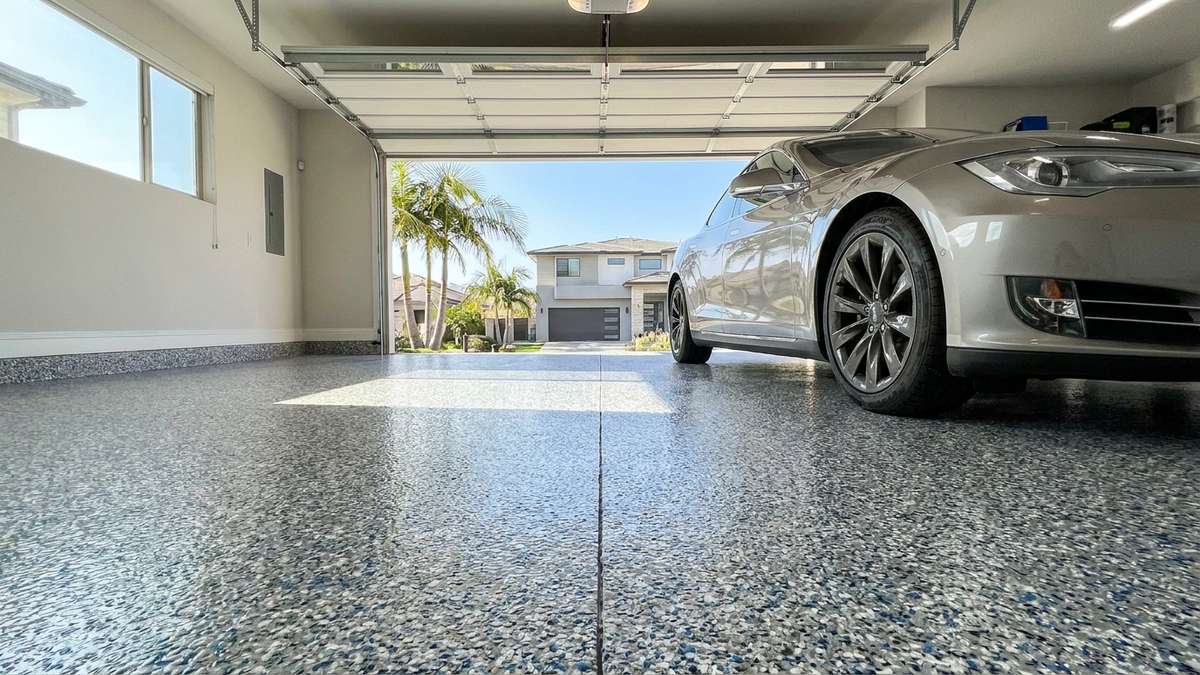
Polyaspartic garage floor coatings cost $6 to $12 per square foot installed in San Diego, compared to $3 to $8 for standard epoxy. The gap narrows significantly when you factor in their lifespans, how soon the floors need recoating, and garage downtime. North County Synthetic Coatings breaks down the initial and long-term numbers in this blog post.
A homeowner who picks epoxy to save $2,000 upfront often spends $2,400 to $9,600 over 15 years on recoats, depending on how aggressively the epoxy fails in San Diego’s UV and heat. The same garage coated once with polyaspartic totals $2,400 to $4,800 for that entire period. The less expensive option on day one often becomes the costlier choice within the first decade. The breakdown below shows exactly where the math changes.
Upfront Cost Comparison: Epoxy vs Polyaspartic
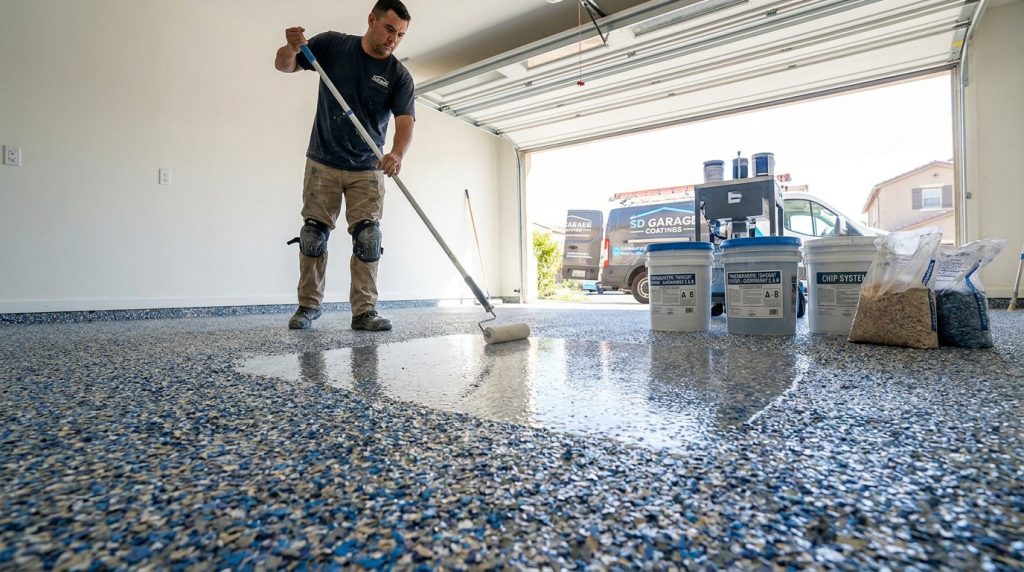
For a standard 400-square-foot two-car garage in San Diego, here’s what professional installation typically costs for each garage floor coating type:
- Epoxy (professional install): $1,200 to $3,200 ($3 to $8 per square foot)
- Polyaspartic (professional install): $2,400 to $4,800 ($6 to $12 per square foot)
The price gap comes from material cost and application speed. Epoxy materials are cheaper per gallon, but the multi-day installation adds labor across two or three site visits. Polyaspartic materials carry a higher per-gallon price, but the entire job finishes in one day, which reduces total labor hours.
San Diego pricing trends 10 to 15% above national averages because of higher labor rates and coastal prep requirements like moisture testing. Both coating types need the same surface prep, so that portion of the quote is roughly equal. For a detailed cost breakdown by garage size, see our garage floor coating cost guide. For Penntek-specific numbers, see ourPenntek coatings cost breakdown.
The 15-Year Cost of Ownership
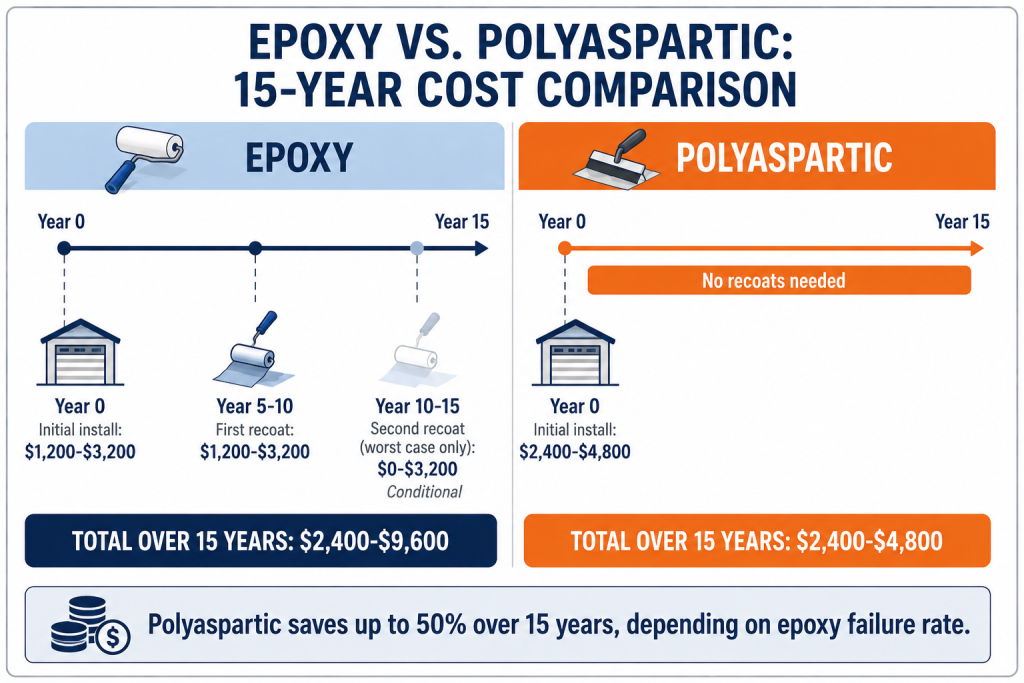
This is where the comparison shifts. Epoxy garage floors in San Diego’s UV and heat environment typically last 5 to 10 years before yellowing, hot-tire damage, or peeling forces a complete recoat. Lower-quality water-based products fail sooner, while premium solvent-based formulations occasionally reach 10-15 years in covered, climate-controlled garages.
Epoxy Over 15 Years
- Initial install: $1,200 to $3,200
- First recoat at year 5-10: $1,200 to $3,200 (includes removal and reprep)
- Second recoat at year 10-15 (only at aggressive failure cycles): $0 to $3,200
- 15-year total: $2,400 to $9,600
Polyaspartic Over 15 Years
- Initial install: $2,400 to $4,800
- Recoats needed: zero (15 to 20-year expected service life with proper prep, and many systems carry lifetime warranties)
- 15-year total: $2,400 to $4,800
Polyaspartic savings depend on how often the epoxy alternative would fail. Homeowners who would have needed only one epoxy recoat in 15 years break roughly even; those who would have needed two recoats save 30% to 50% with polyaspartic upfront.
Each epoxy recoat also means another round of garage downtime, removal prep, and scheduling headaches that don’t appear on the initial quote.
What Drives the Price Difference?
Three factors separate these two coating types on the price sheet. Understanding them helps you evaluate any polyaspartic vs epoxy quote you receive:
- Material chemistry: Polyaspartic resins are more complex to manufacture than standard two-part epoxy. The faster cure, UV stability, and flexibility come from a more advanced chemical formulation. That chemistry is why polyaspartic resists San Diego’s intense year-round sun while epoxy yellows within a few years.
- Installation time: Epoxy’s multi-day cure means two or three trips to the job site. Polyaspartic’s one-day timeline consolidates all labor into a single visit, reducing overhead per project.
- Prep requirements: Both coatings need diamond grinding, crack repair, and moisture testing. The prep cost is similar regardless of coating type. The entire difference between quotes shows up in materials and application labor.
Frequently Asked Questions
Is polyaspartic worth the extra upfront cost?
For most San Diego garages, yes. Polyaspartic systems carry expected service life ratings of 15 to 20 years without recoating, while epoxy typically needs replacement within 5 to 10 years. The long-term savings, plus a one-day install that avoids a week of garage downtime, makes polyaspartic the better value for homeowners planning to stay five or more years.
Can I get a polyaspartic floor closer to the epoxy price range?
Pricing depends on garage size, concrete condition, and flake blend selection. North County Synthetic Coatings offers free estimates that break down exact costs for your specific garage. Smaller garages and slabs in good condition typically fall toward the lower end of the polyaspartic range.
Does epoxy or polyaspartic handle San Diego heat better?
Polyaspartic performs better in heat. Epoxy softens at high temperatures and is prone to hot-tire pickup, where heated tires pull the coating off the concrete. Polyaspartic resists hot tires and stays UV-stable year-round, preventing the yellowing that plagues epoxy floors across Southern California.
The Coating That Costs Less Over Time
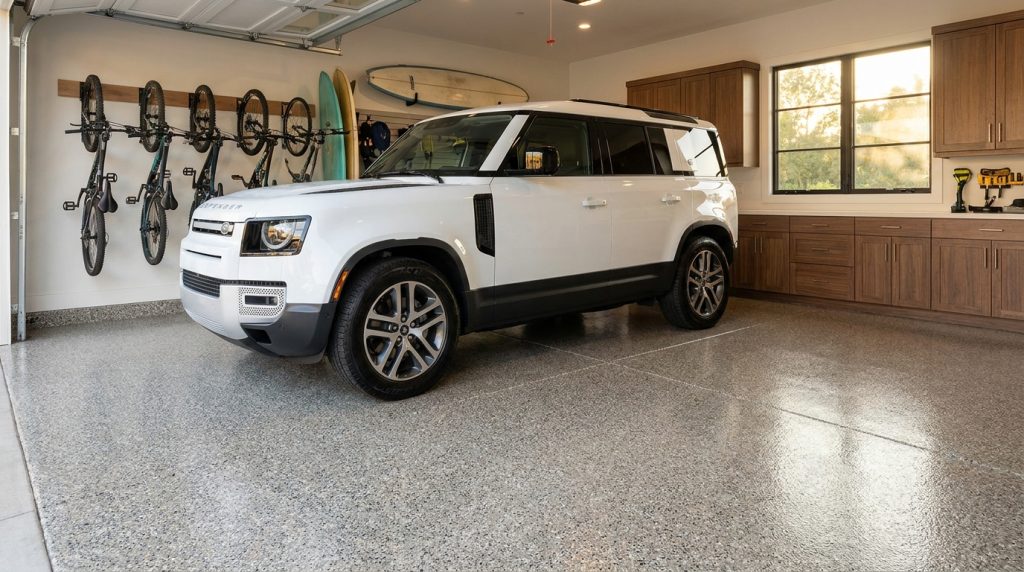
If you’re comparing quotes, look past the per-square-foot number on day one. A $2,000 epoxy job that needs replacing in five to ten years costs more than a $3,500 polyaspartic job that lasts 15 to 20 years. The math consistently favors polyaspartic for San Diego homeowners who plan to stay in their home more than a few years.
Contact North County Synthetic Coatings for a free estimate, or call (760) 618-1188. Our team is ready to explain the full cost at no charge.

Troy Rasmusen is a San Diego-based entrepreneur and the owner of North County Synthetic Coatings. Specializing in premium floor transformations, Troy combines technical expertise with a commitment to quality craftsmanship to help Southern California property owners elevate their spaces.